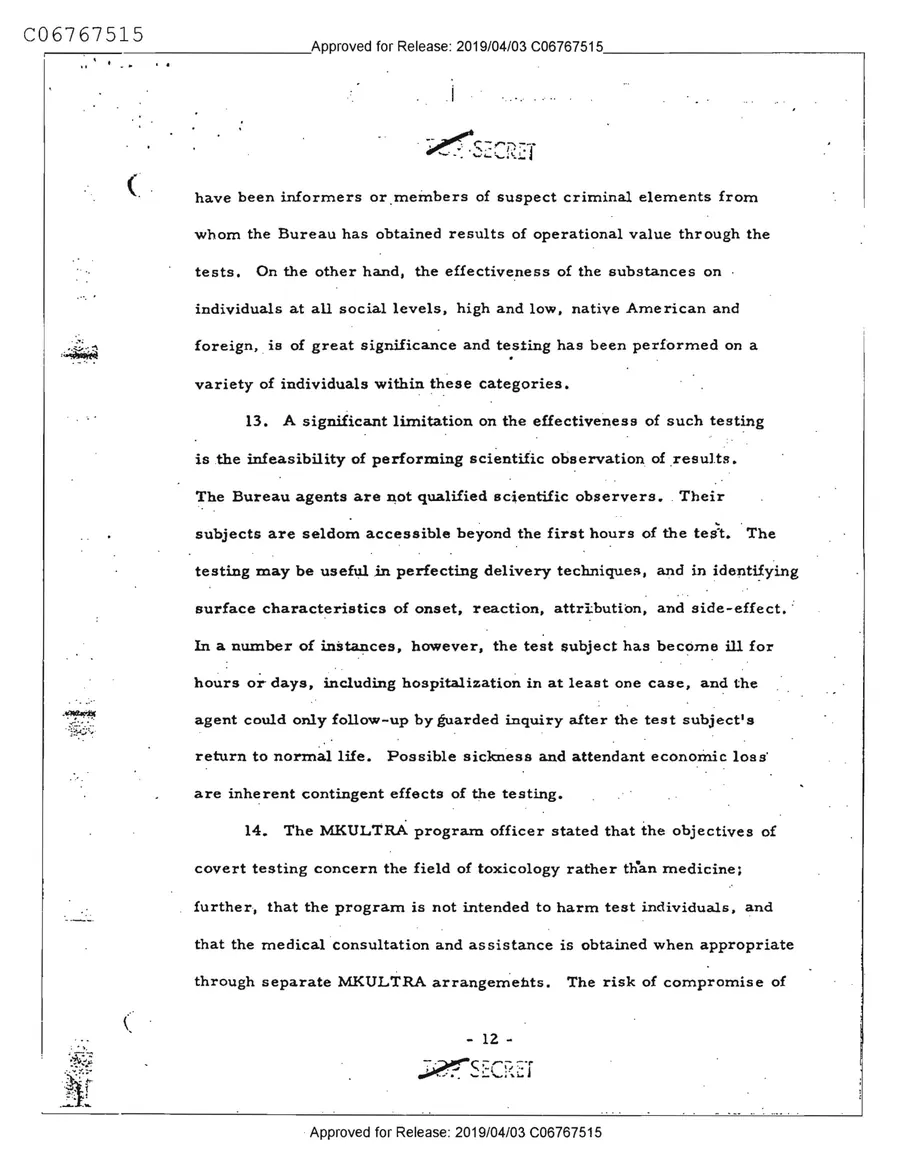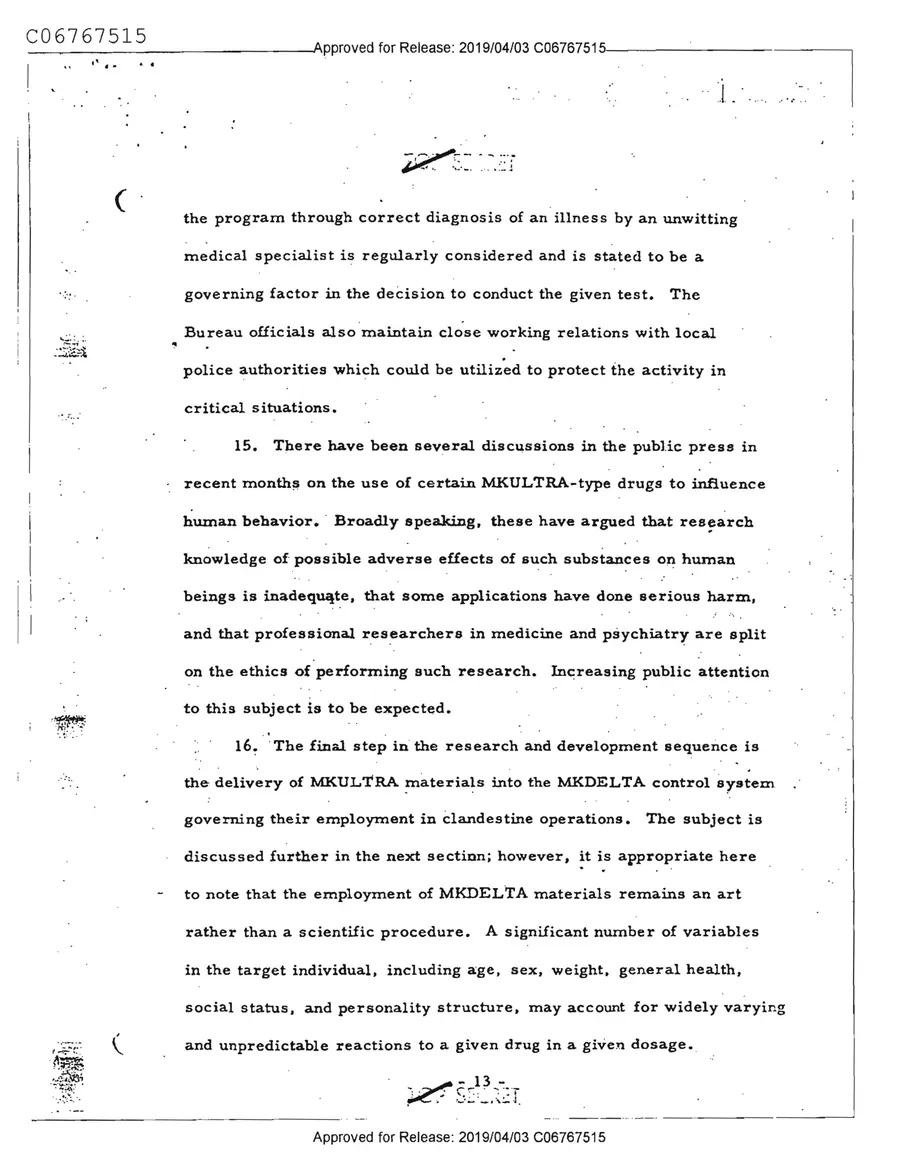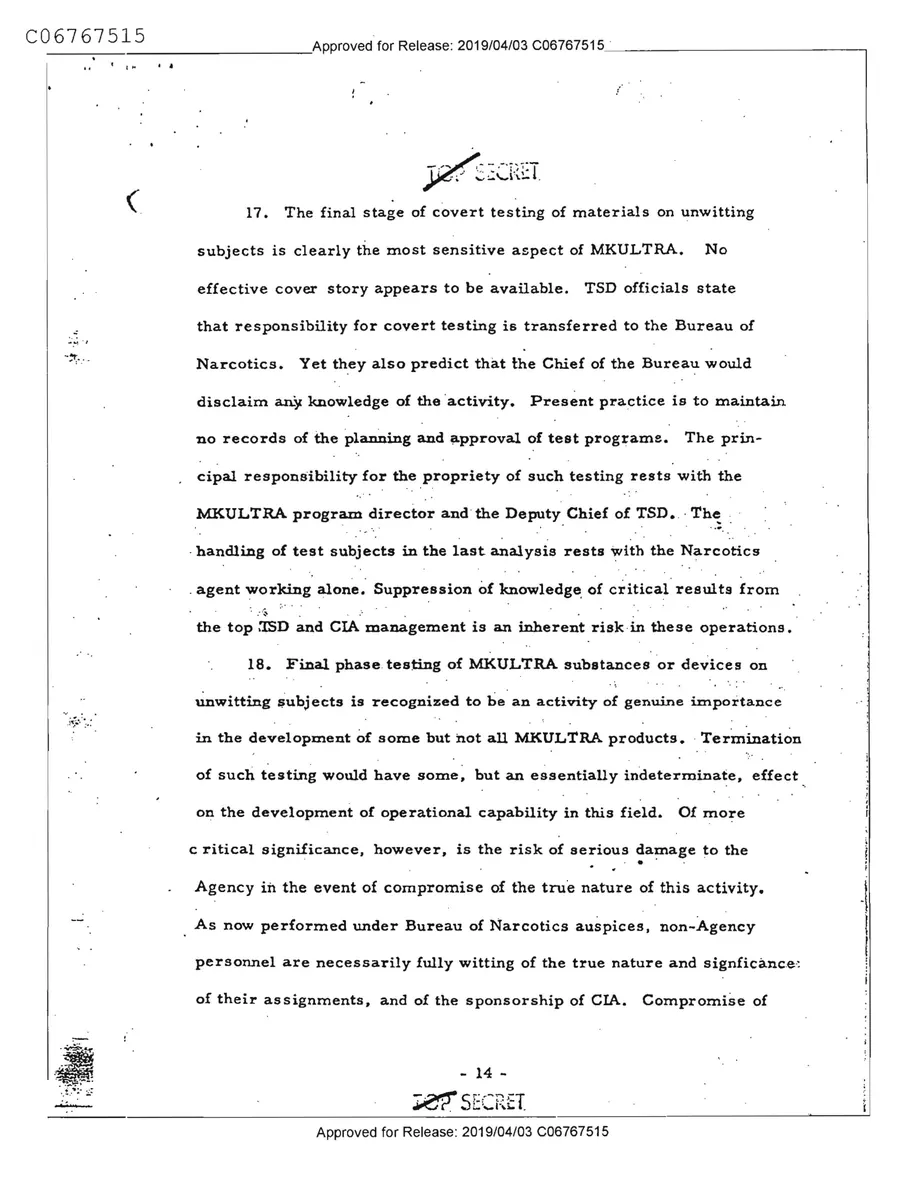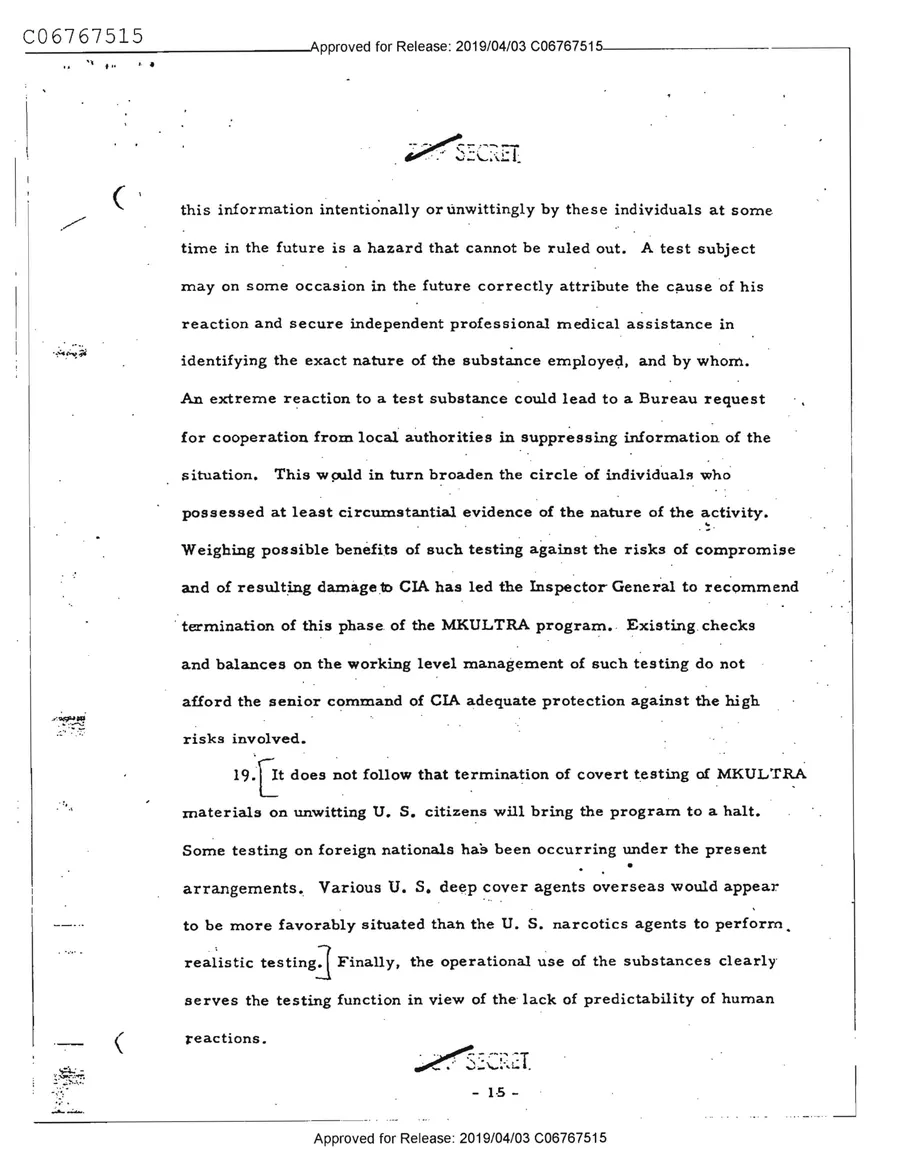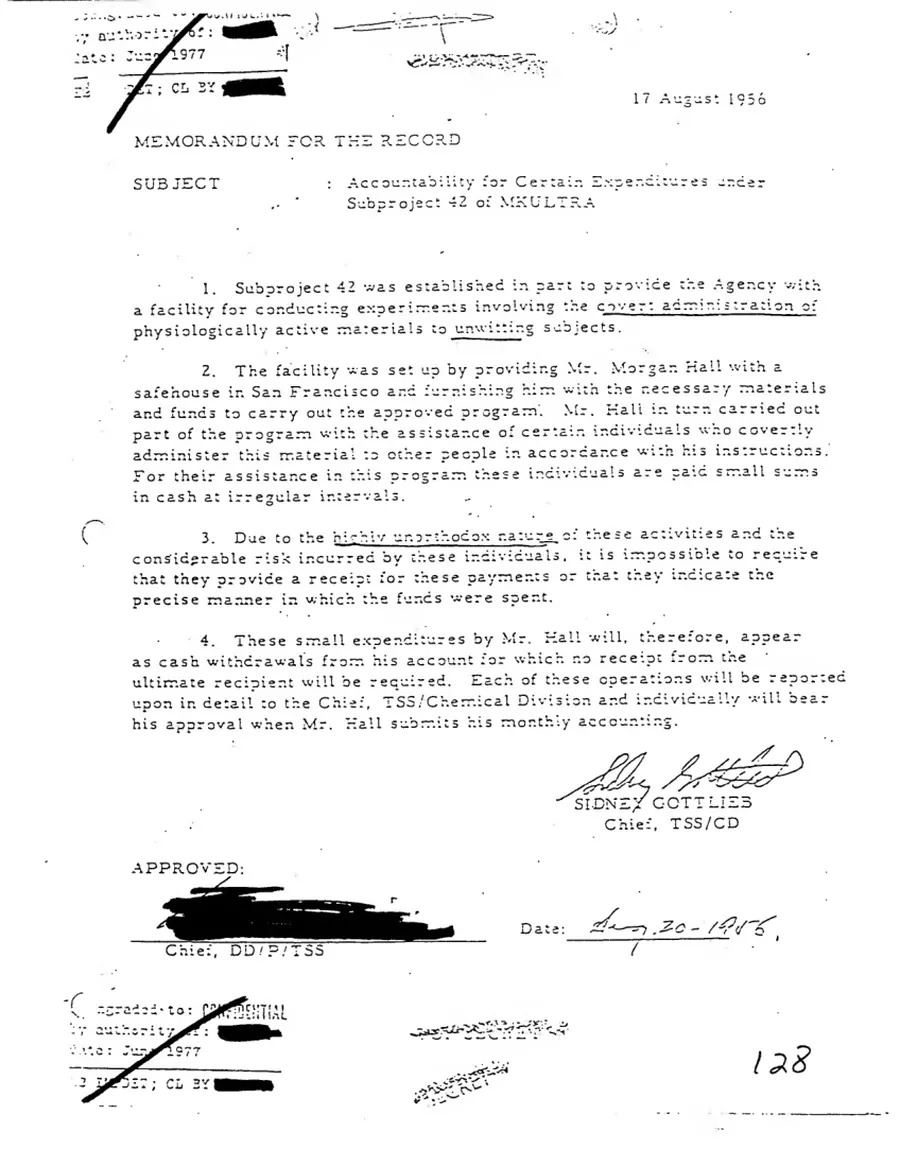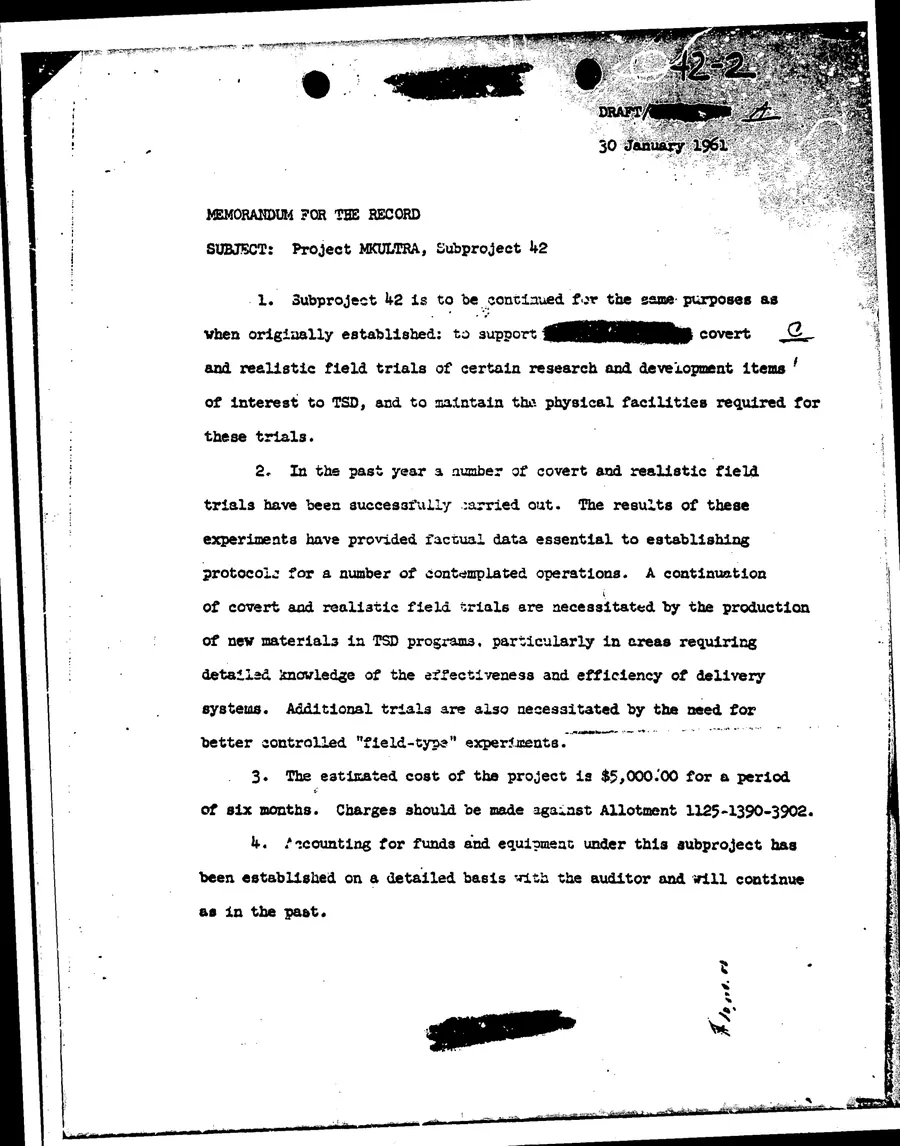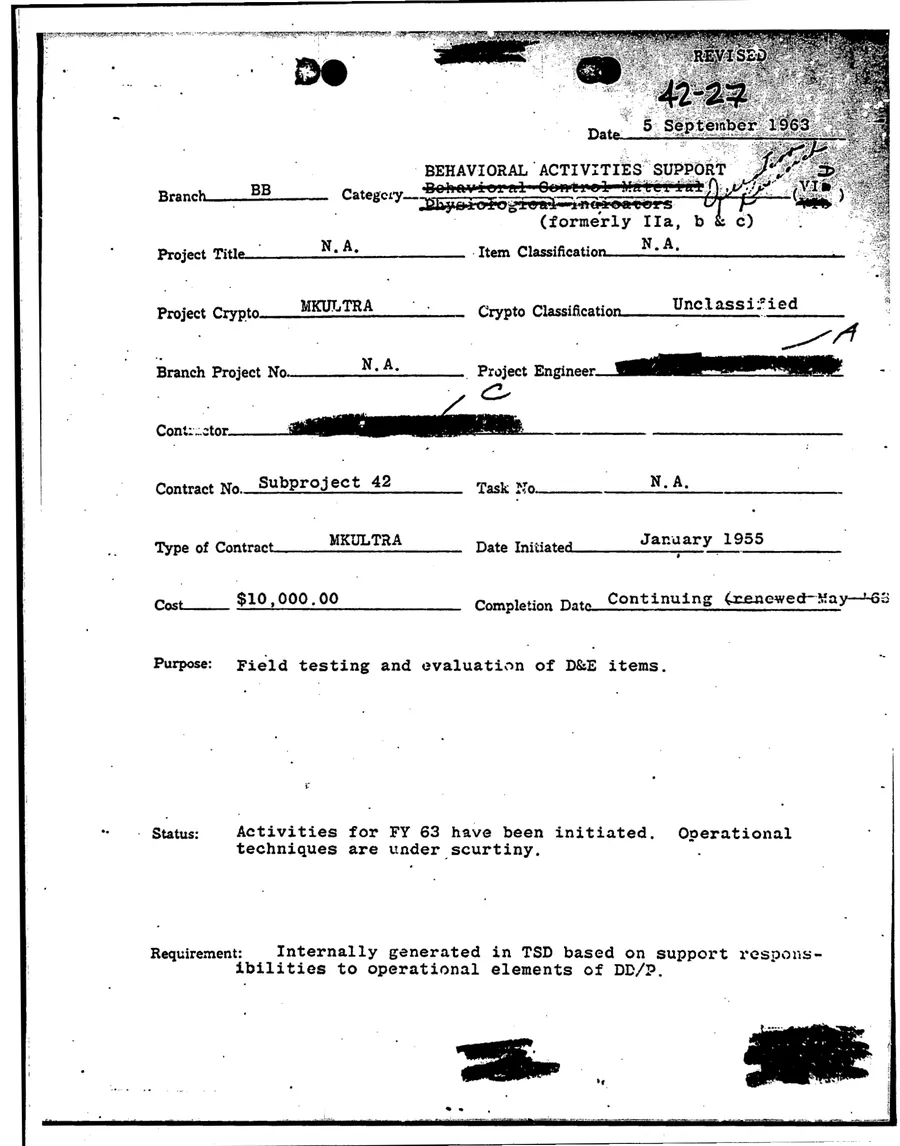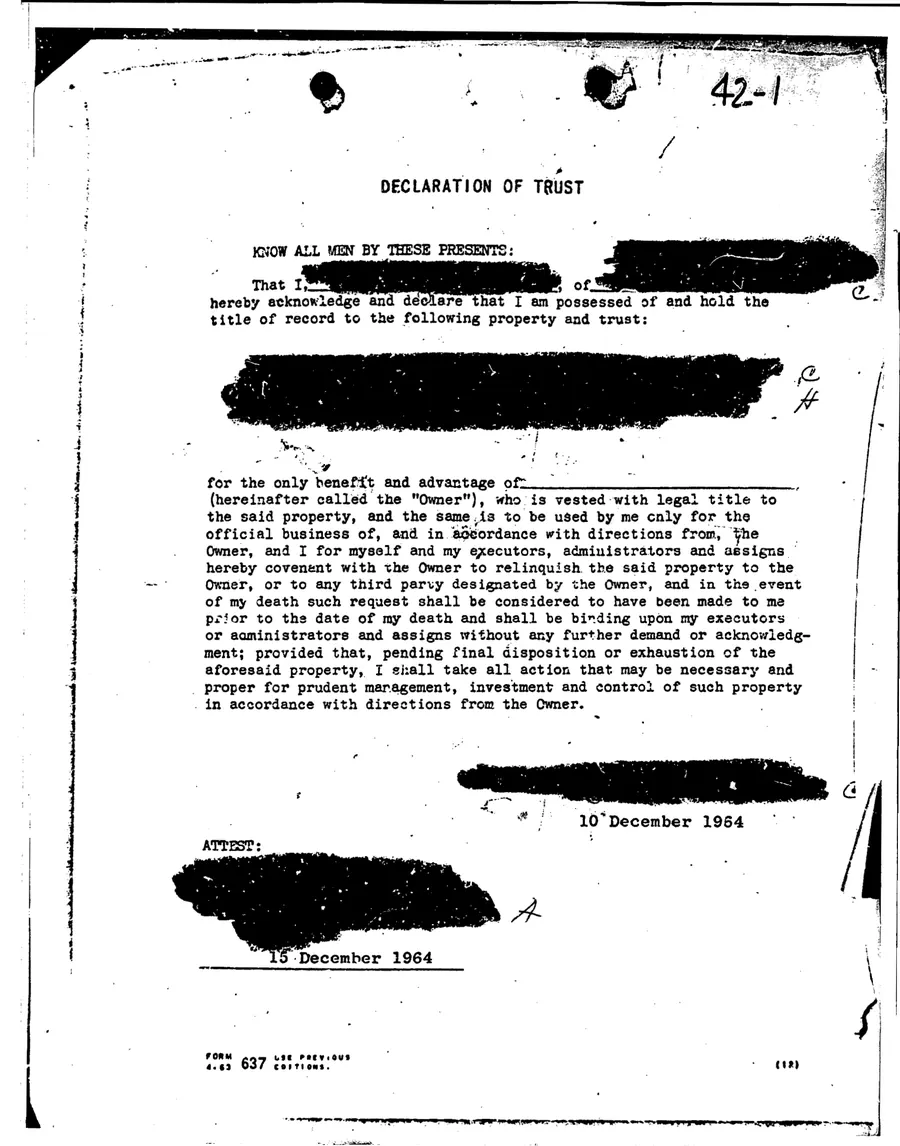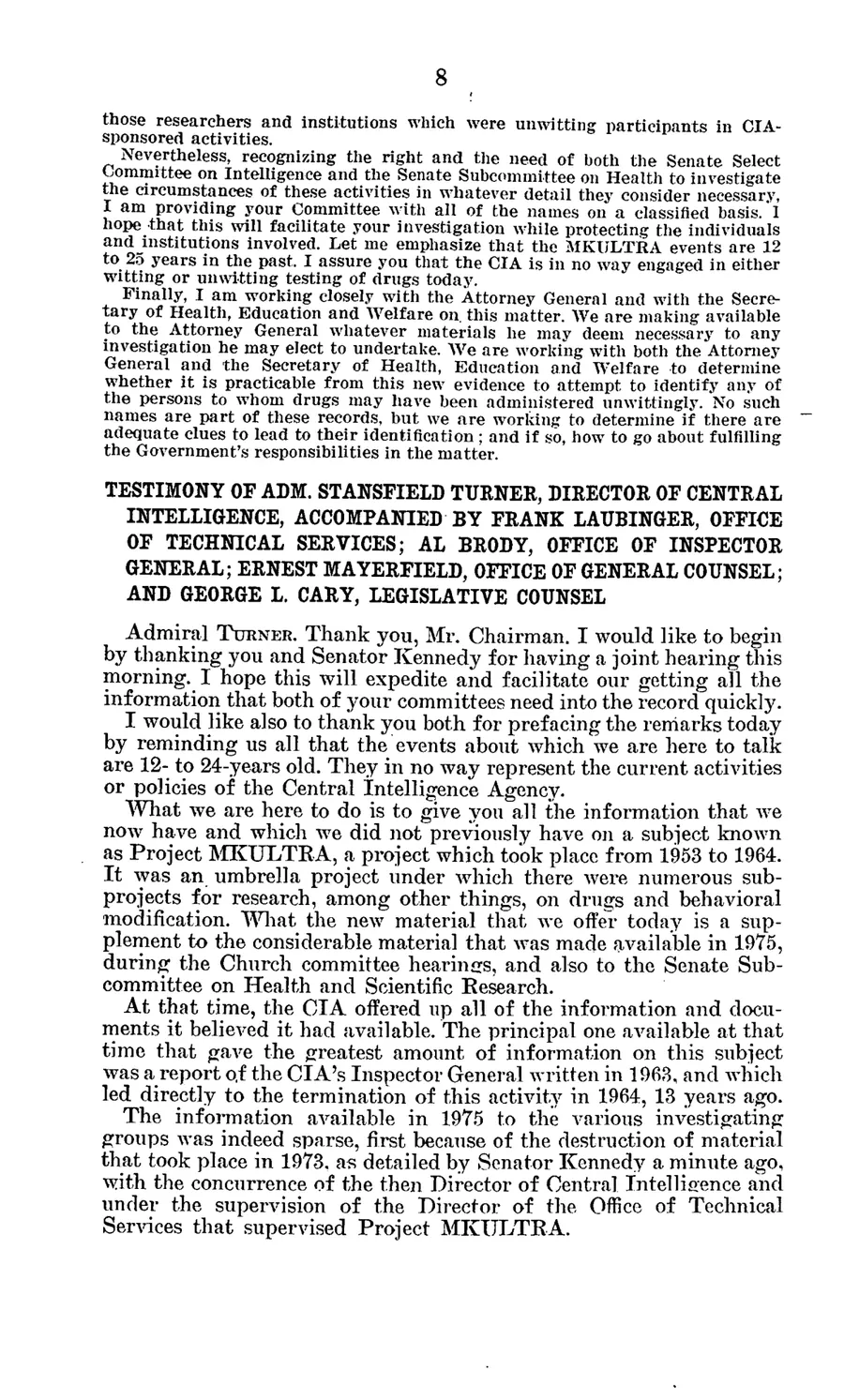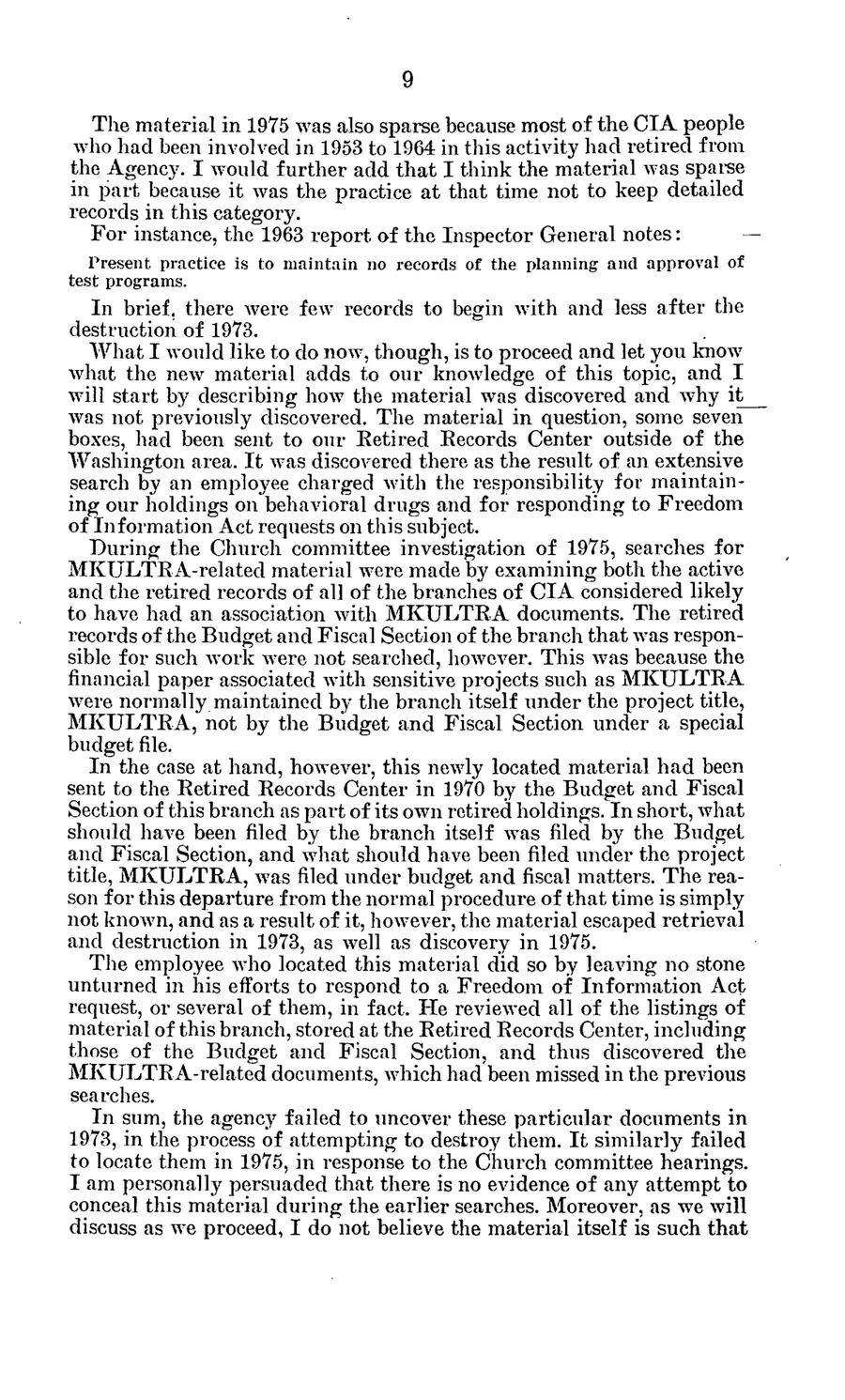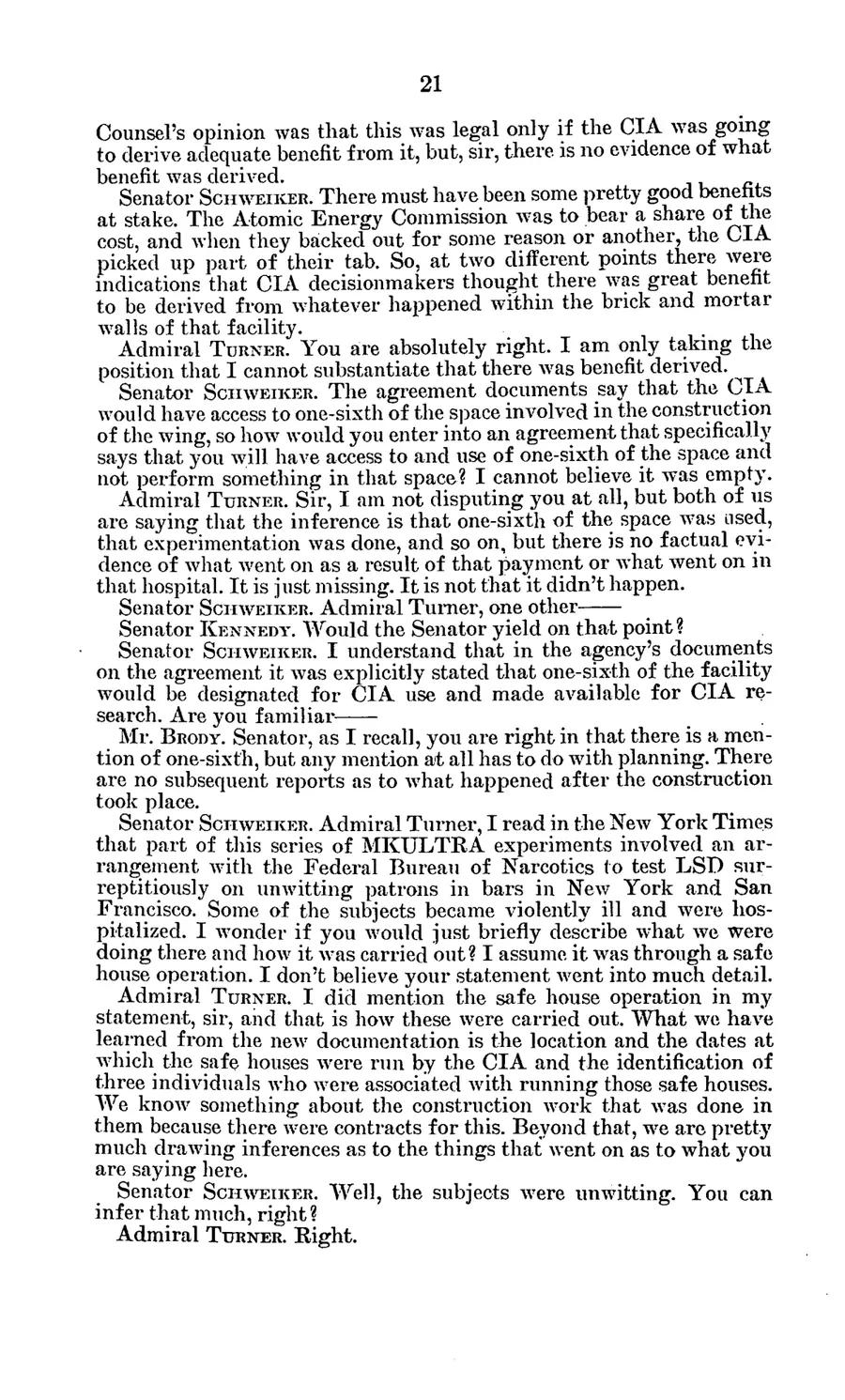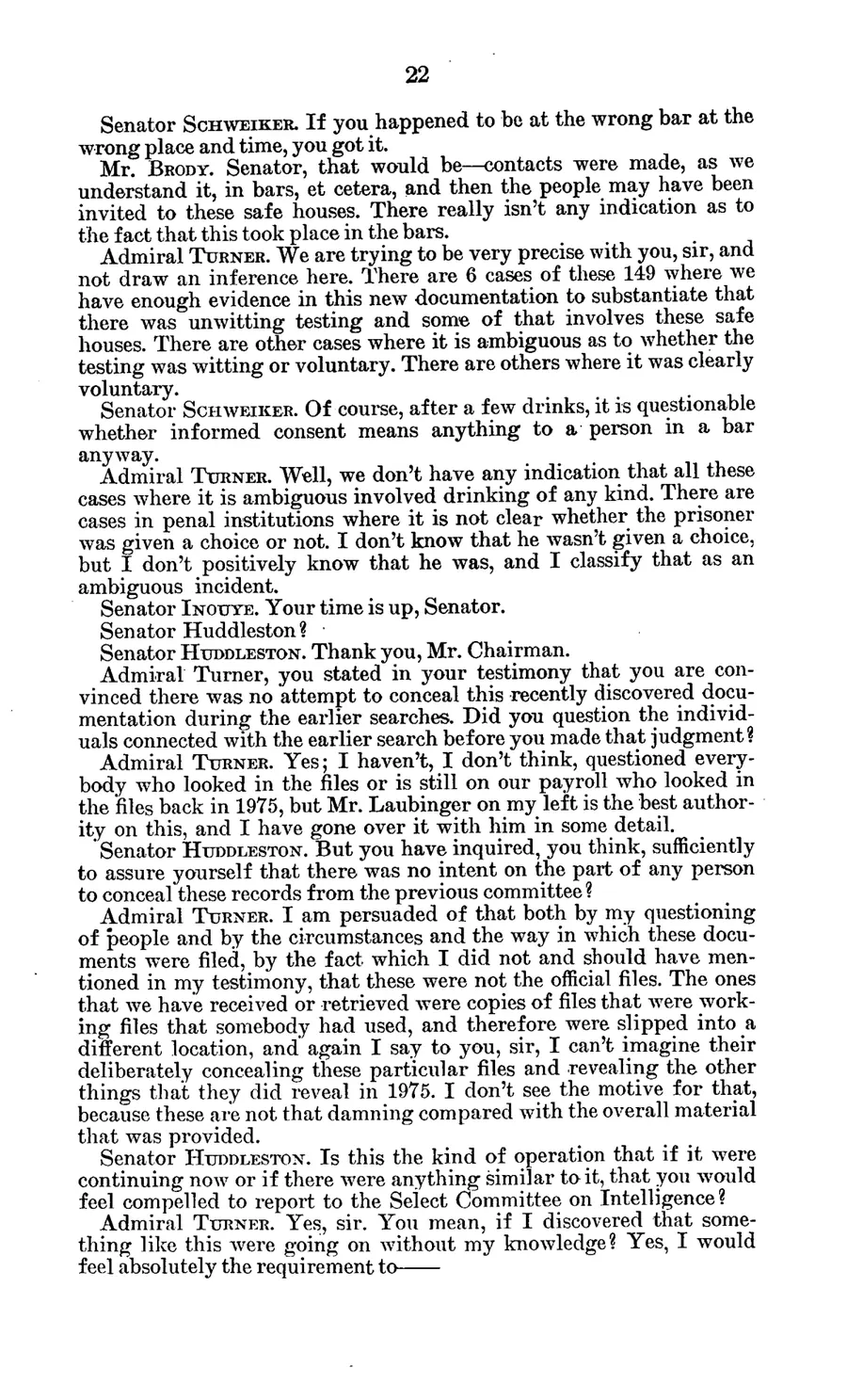
FULL TEXT
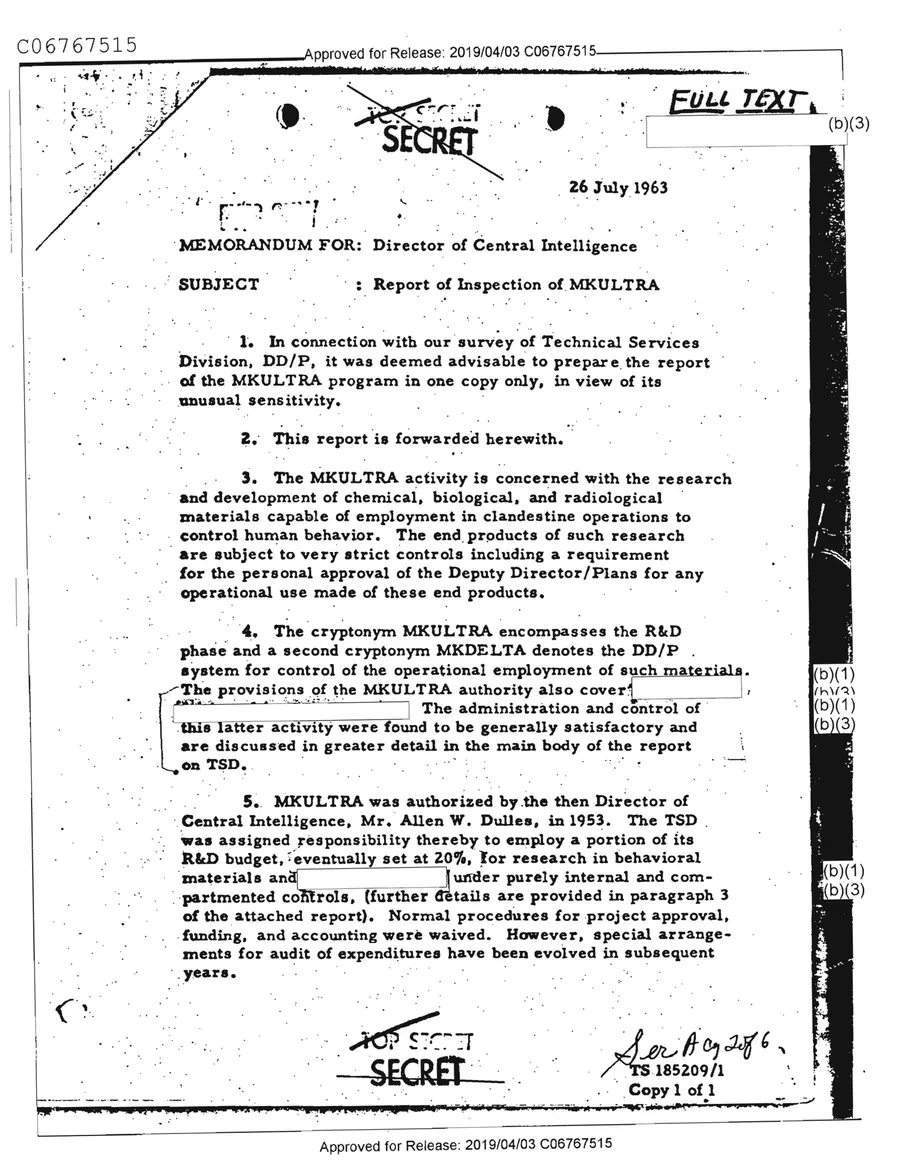
1. In connection with our survey of Technical Services Division, DD/P, it was deemed advisable to prepare the report of the MKULTRA program in one copy only, in view of its unusual sensitivity.
2. This report is forwarded herewith.
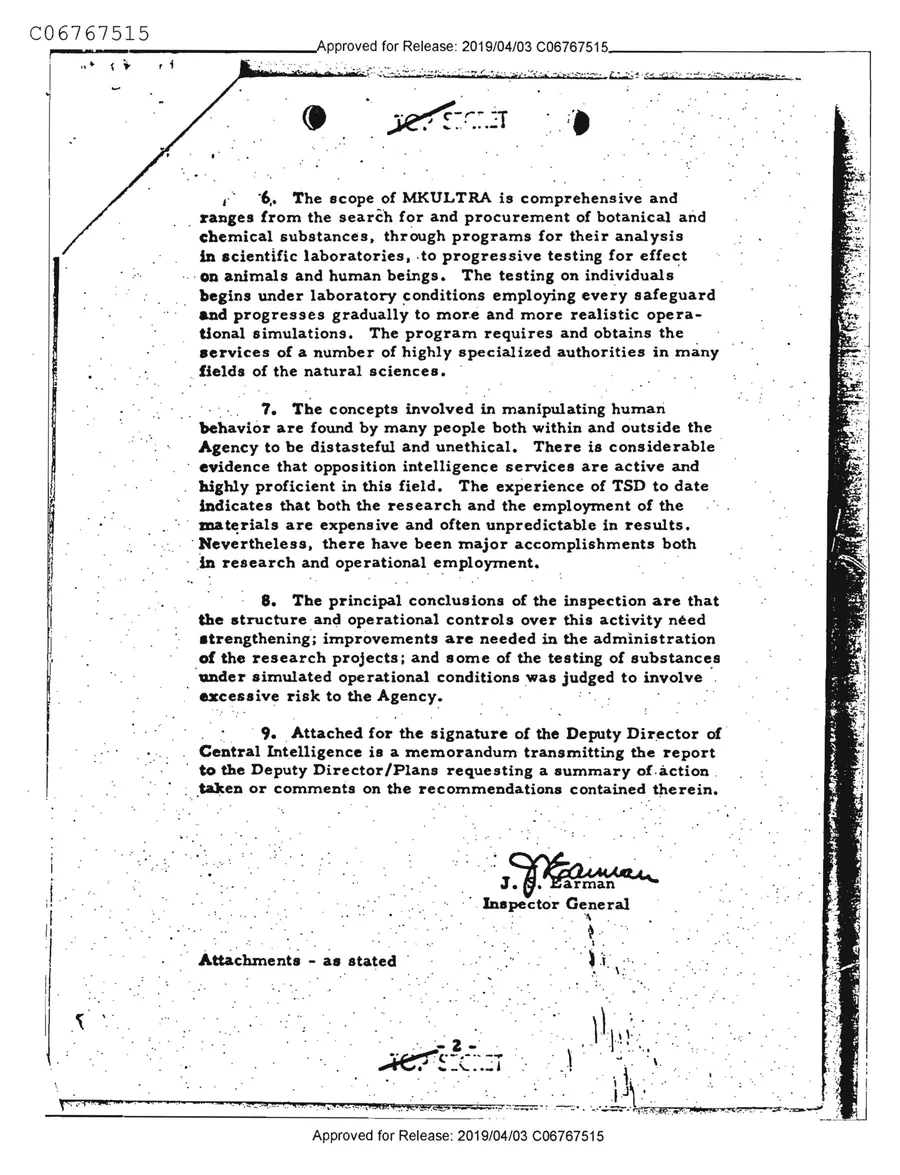
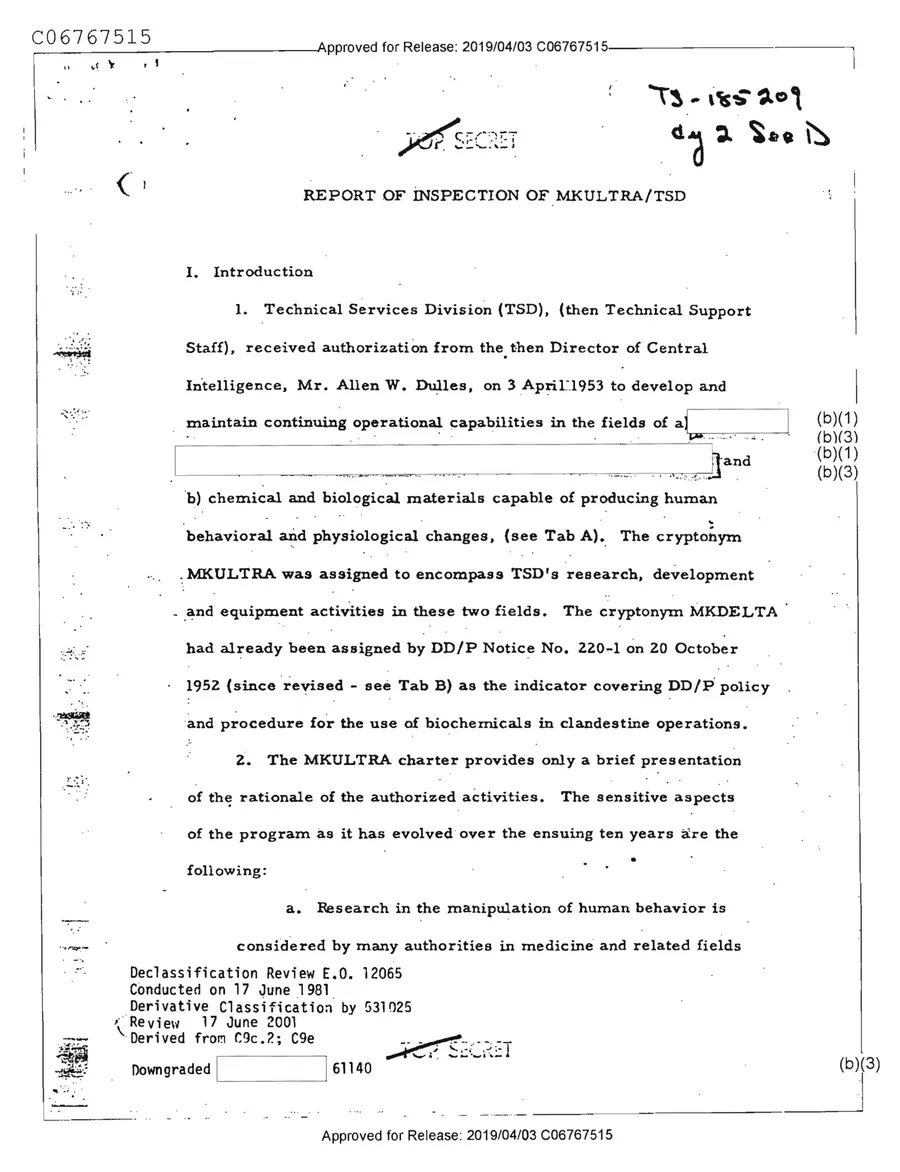
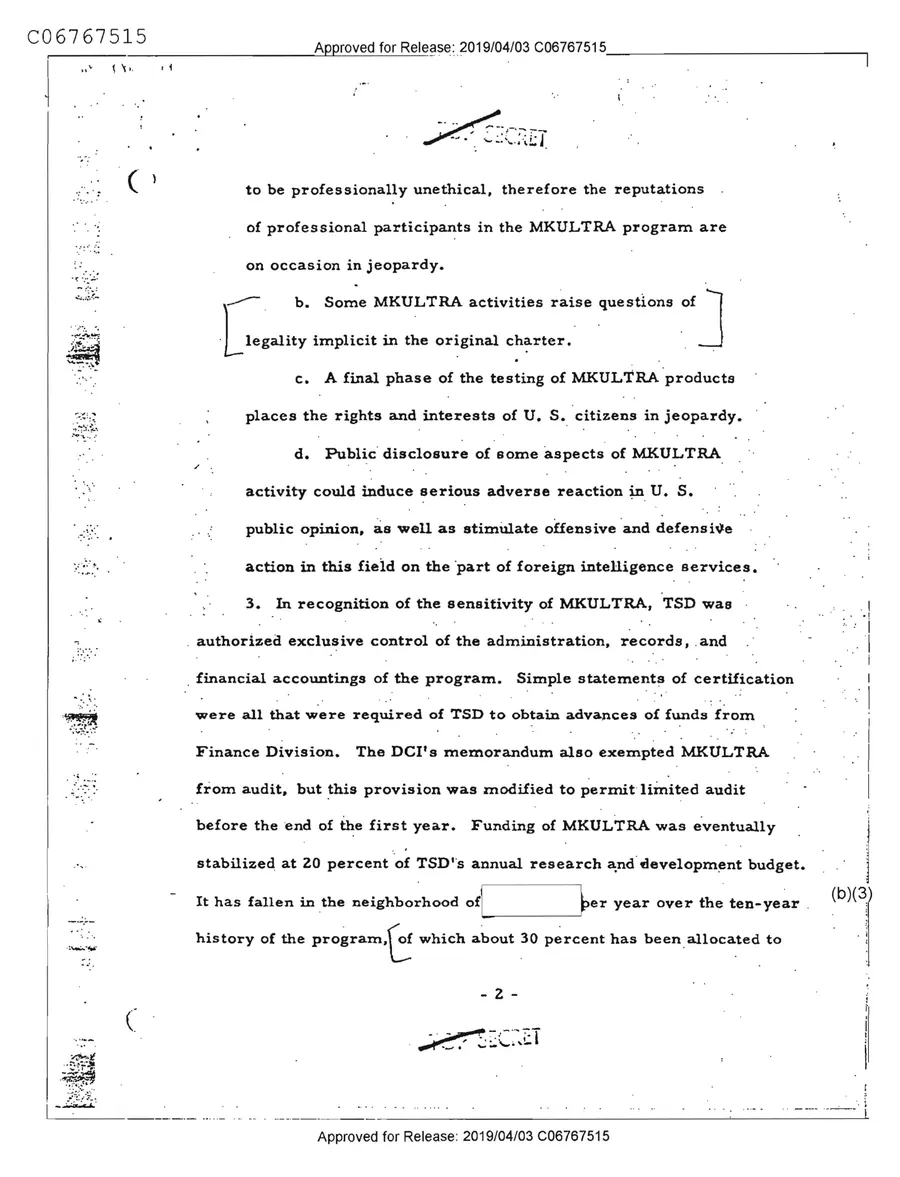
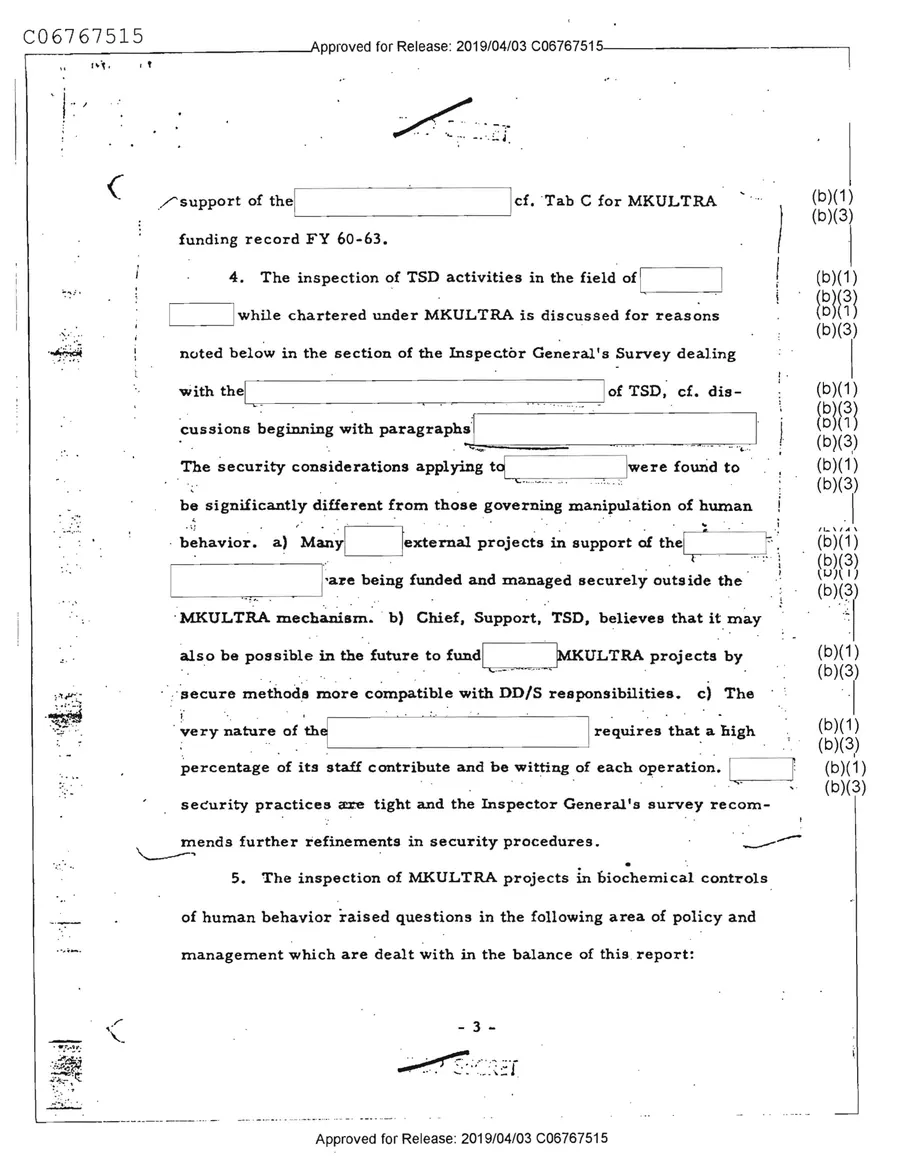
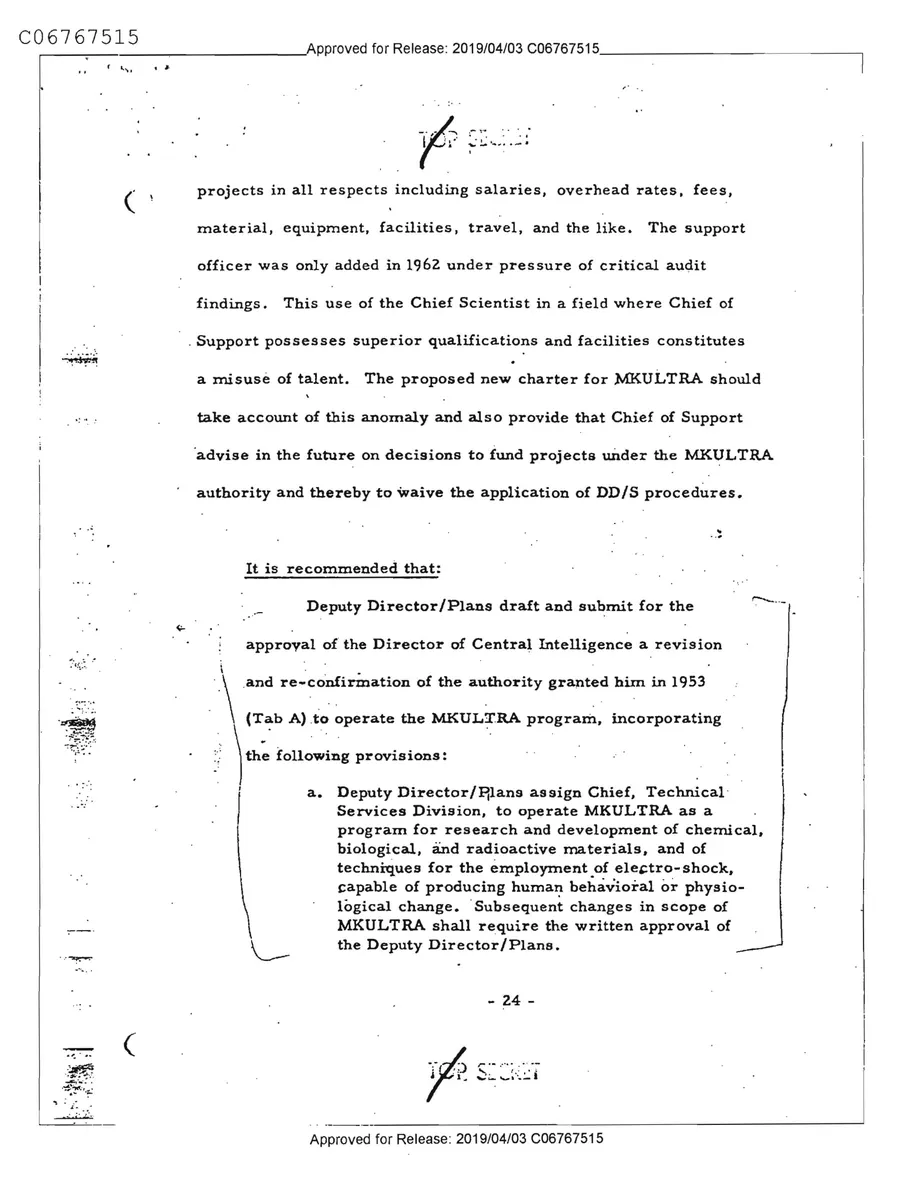
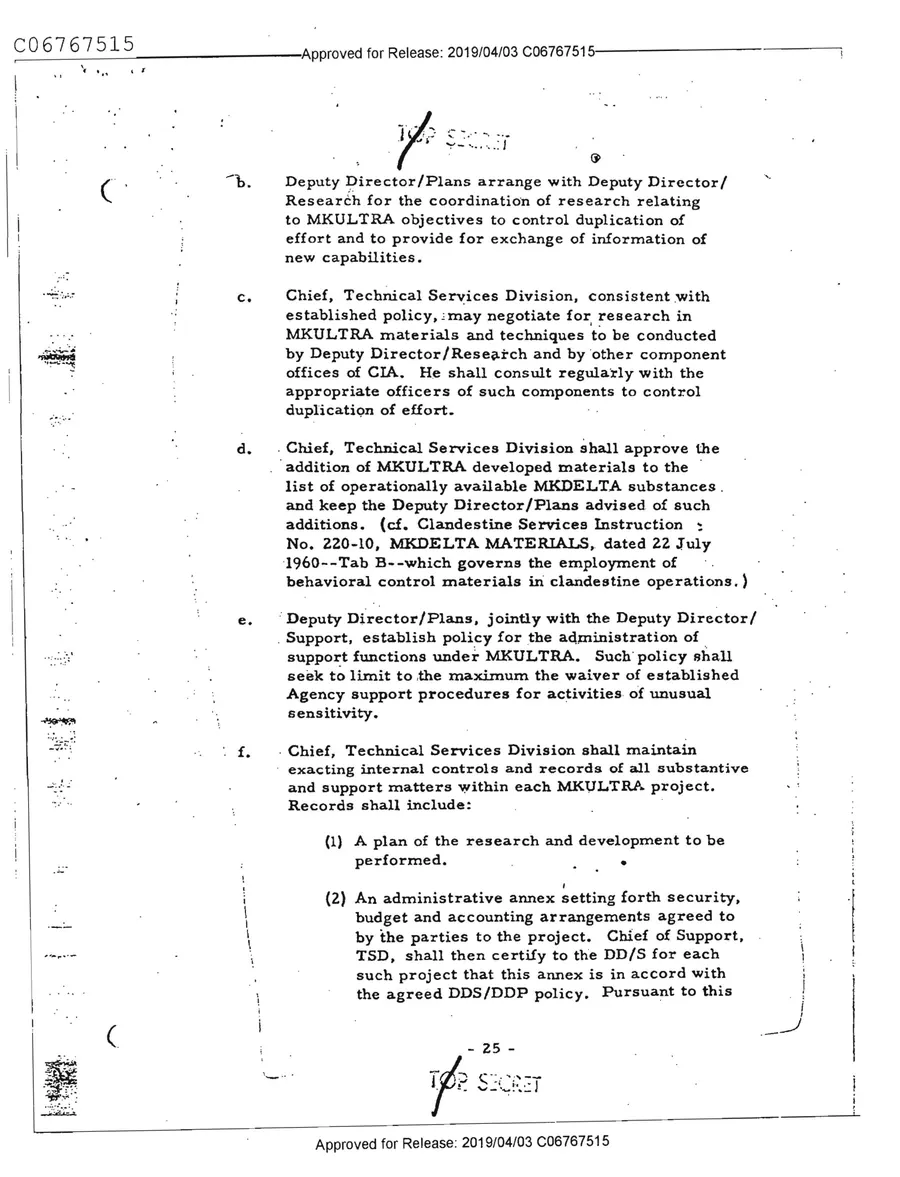
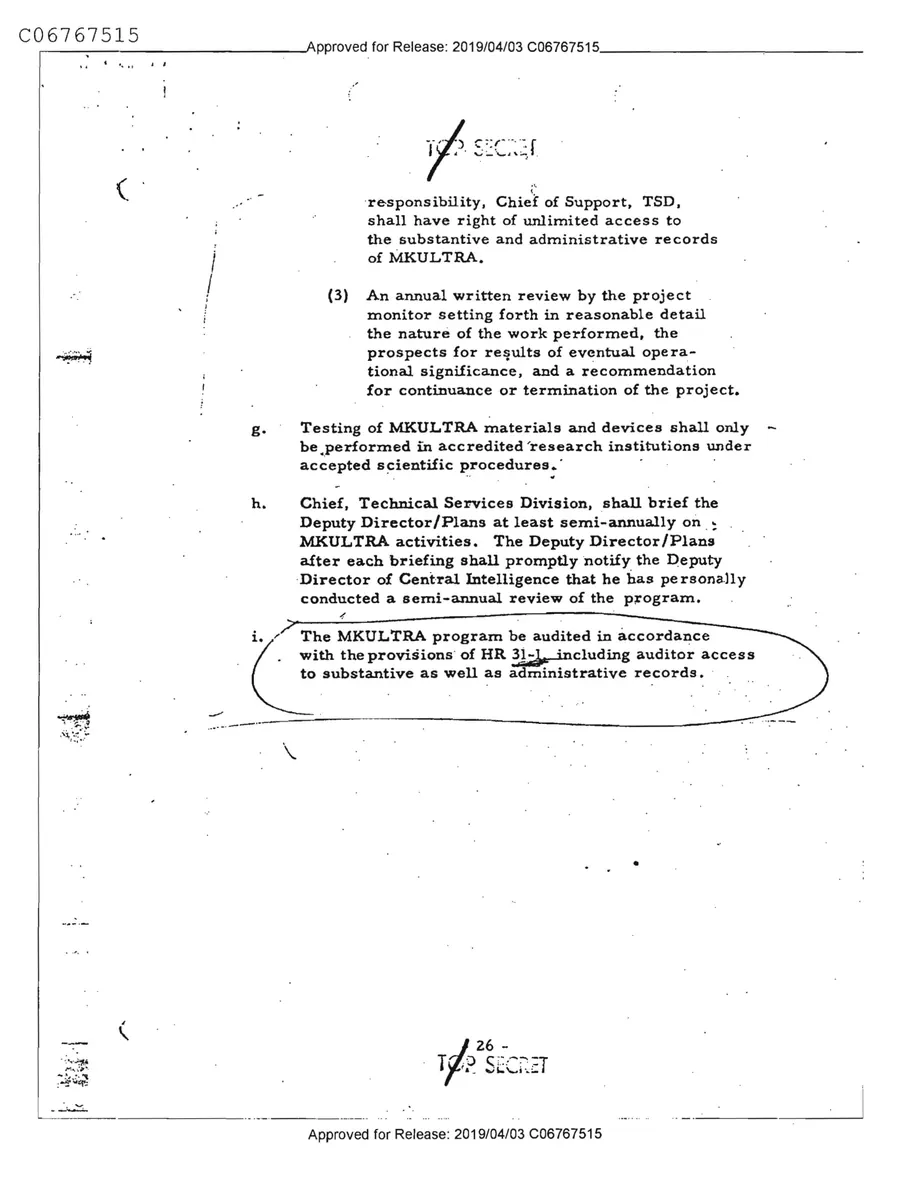
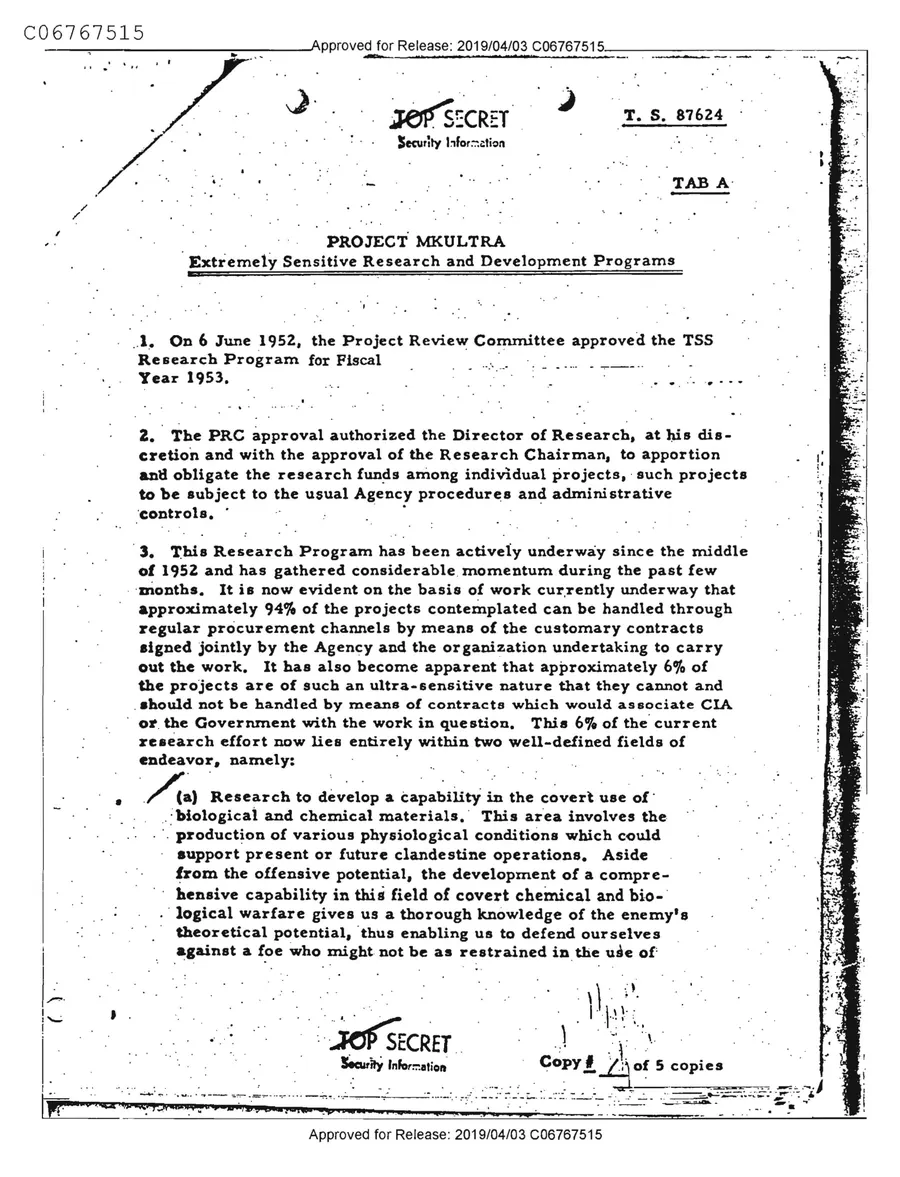
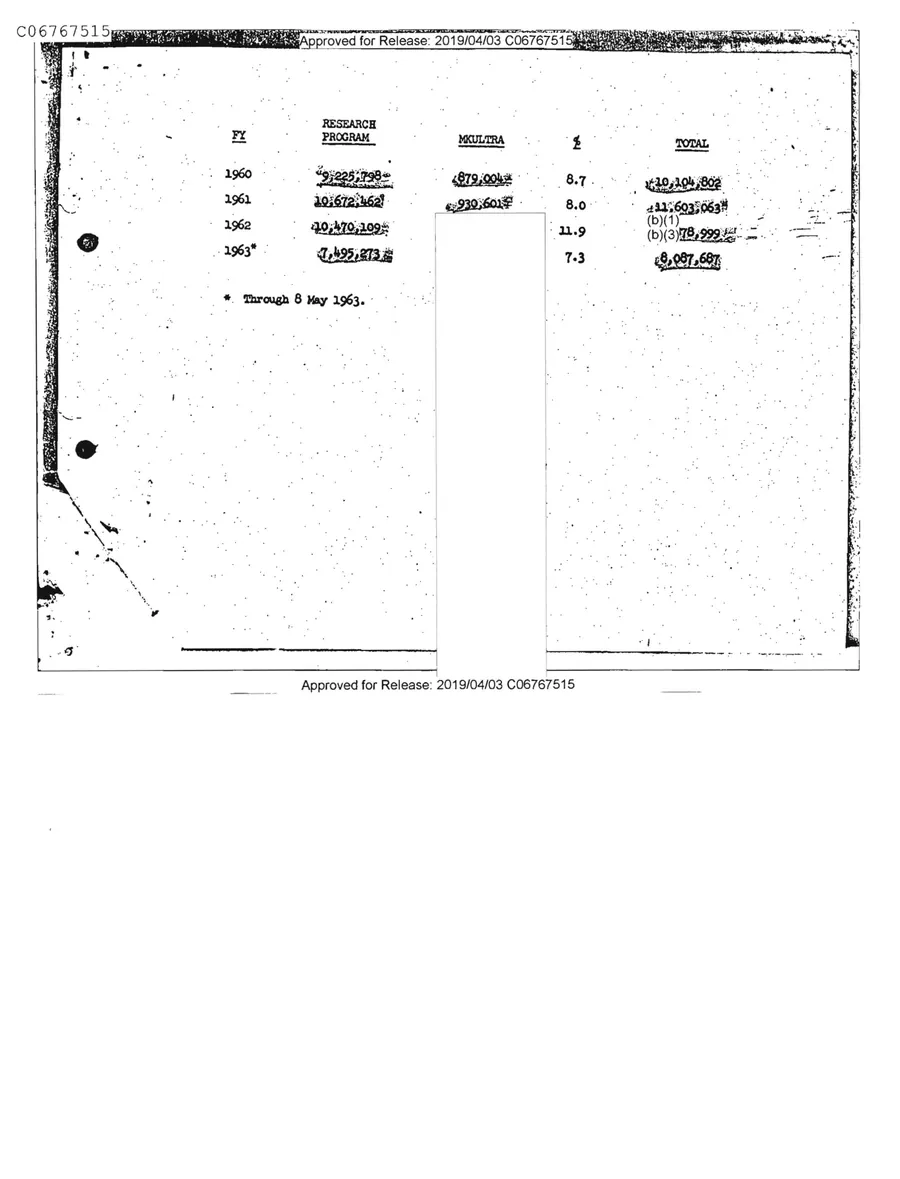
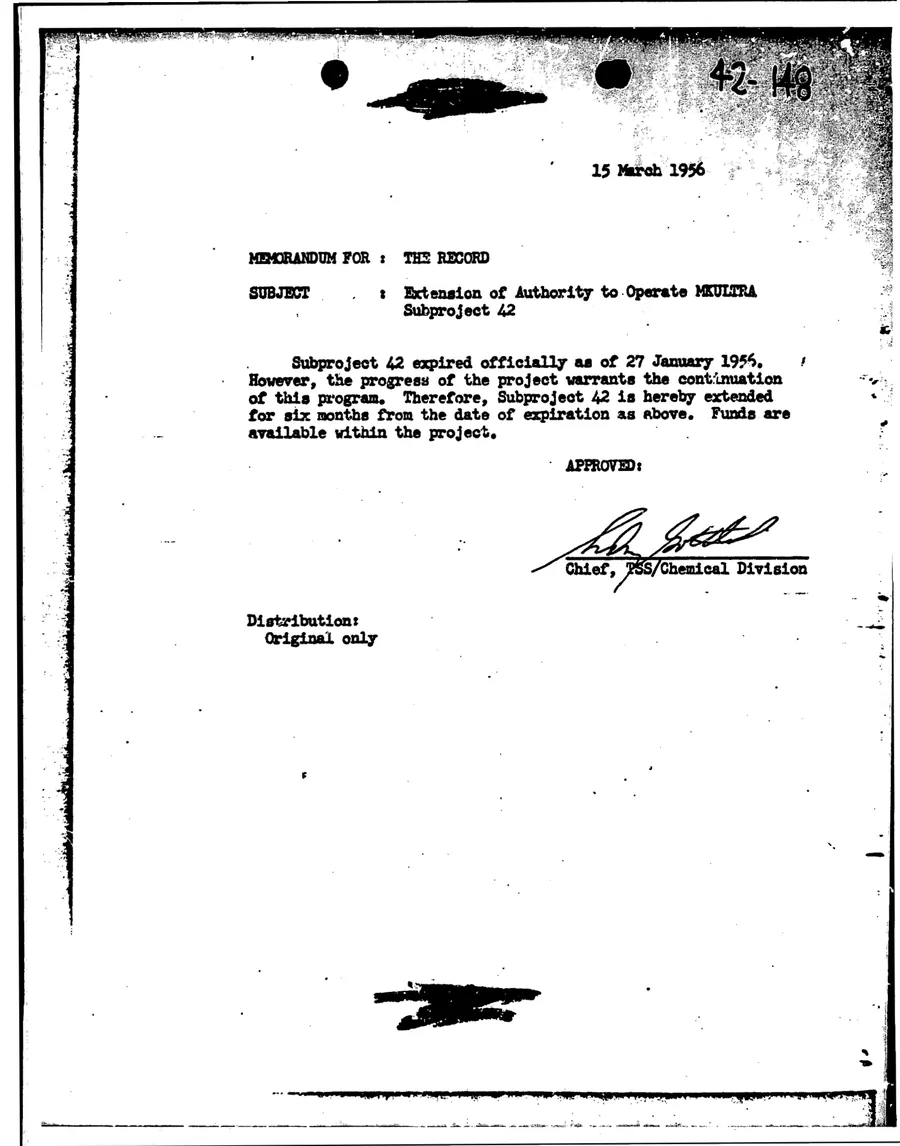
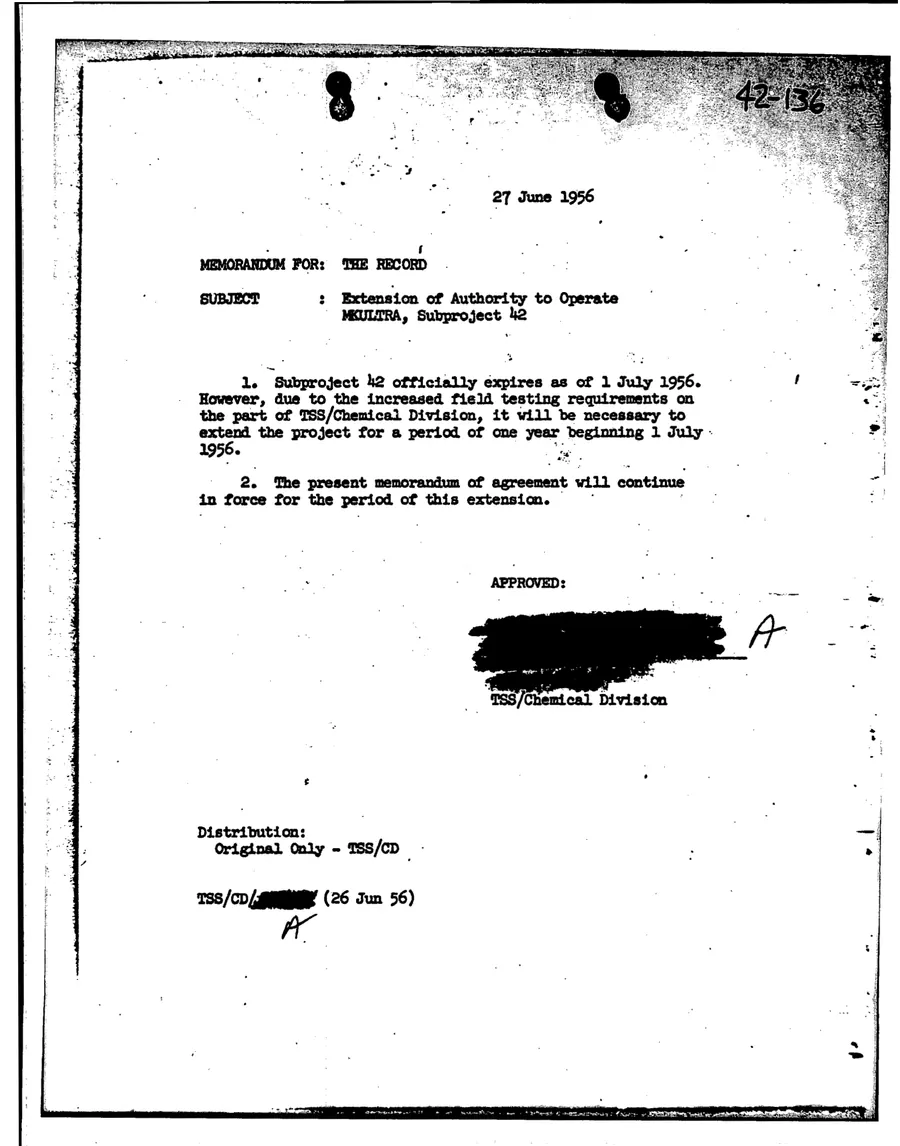
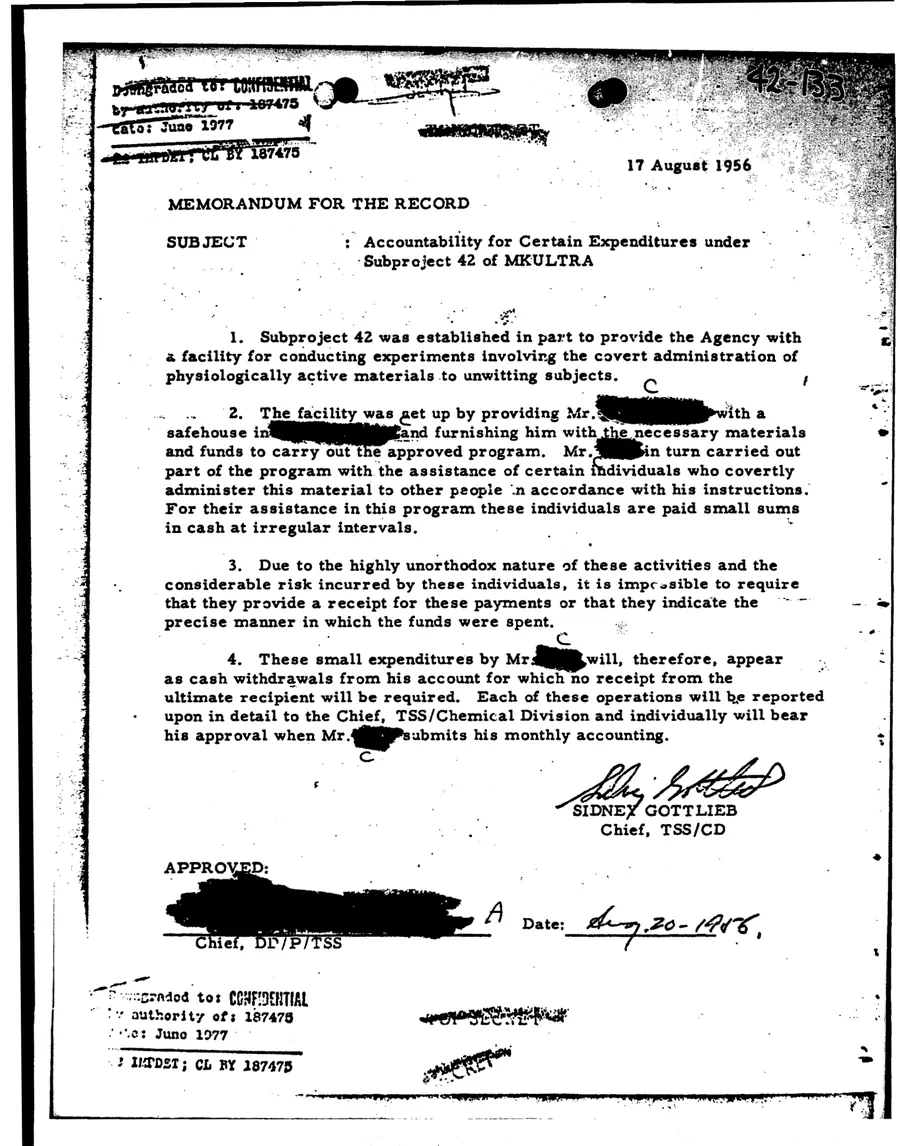
3. The MKULTRA activity is concerned with the research and development of chemical, biological, and radiological materials capable of employment in clandestine operations to control human behavior. The end products of such research are subject to very strict controls including a requirement for the personal approval of the Deputy Director/Plans for any operational use made of these end products.
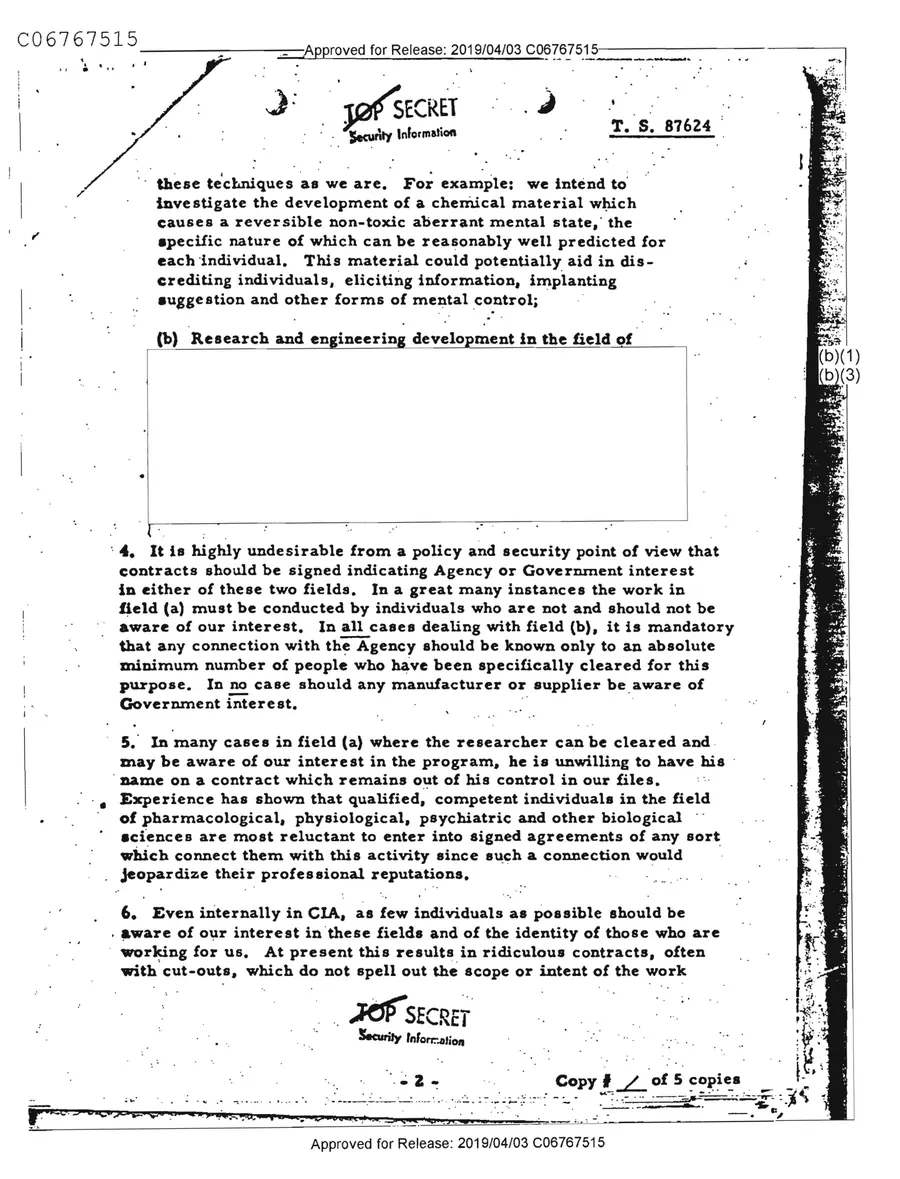
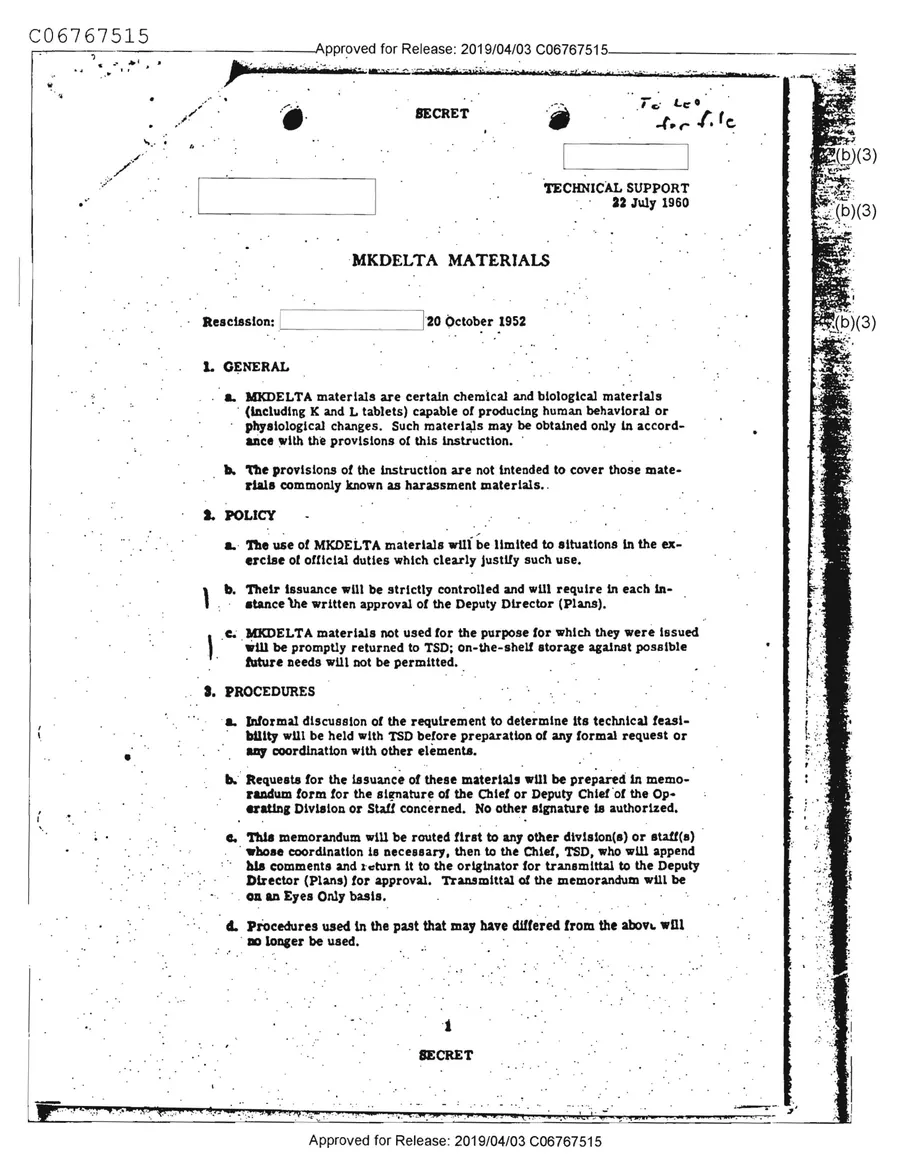
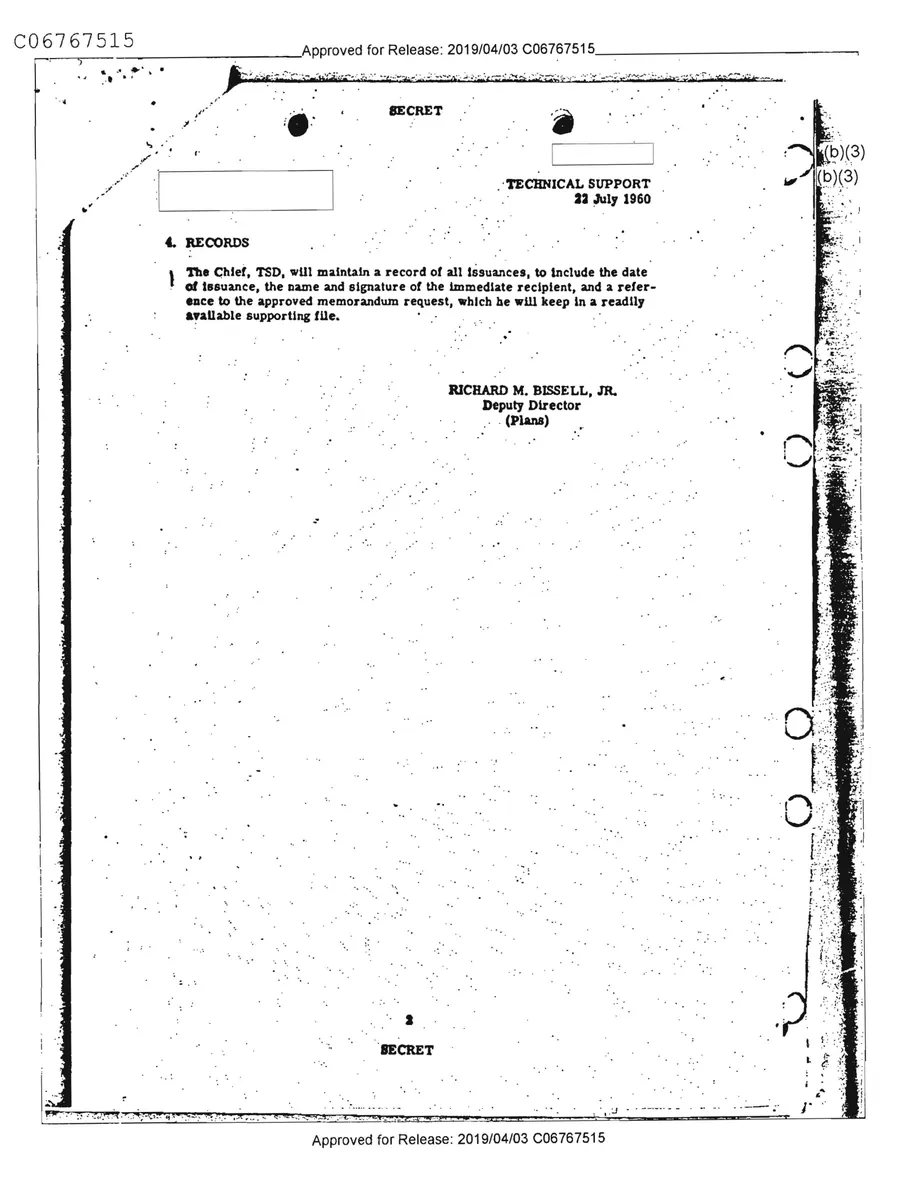
4. The cryptonym MKULTRA encompasses the R&D phase and a second cryptonym MKDELTA denotes the DD/P system for control of the operational employment of such materials. The provisions of the MKULTRA authority also cover [redacted] [redacted] The administration and control of this latter activity were found to be generally satisfactory and are discussed in greater detail in the main body of the report on TSD.
[marginal bracket]
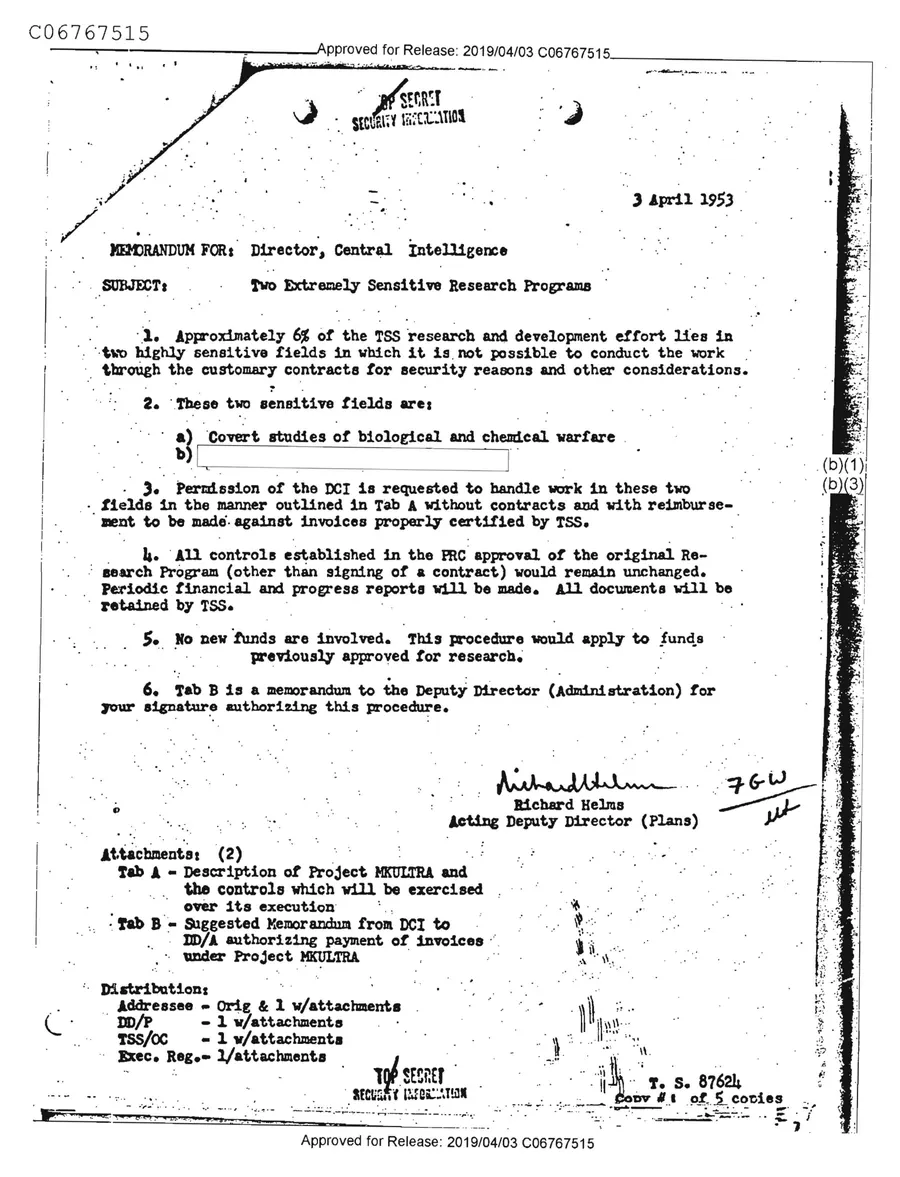
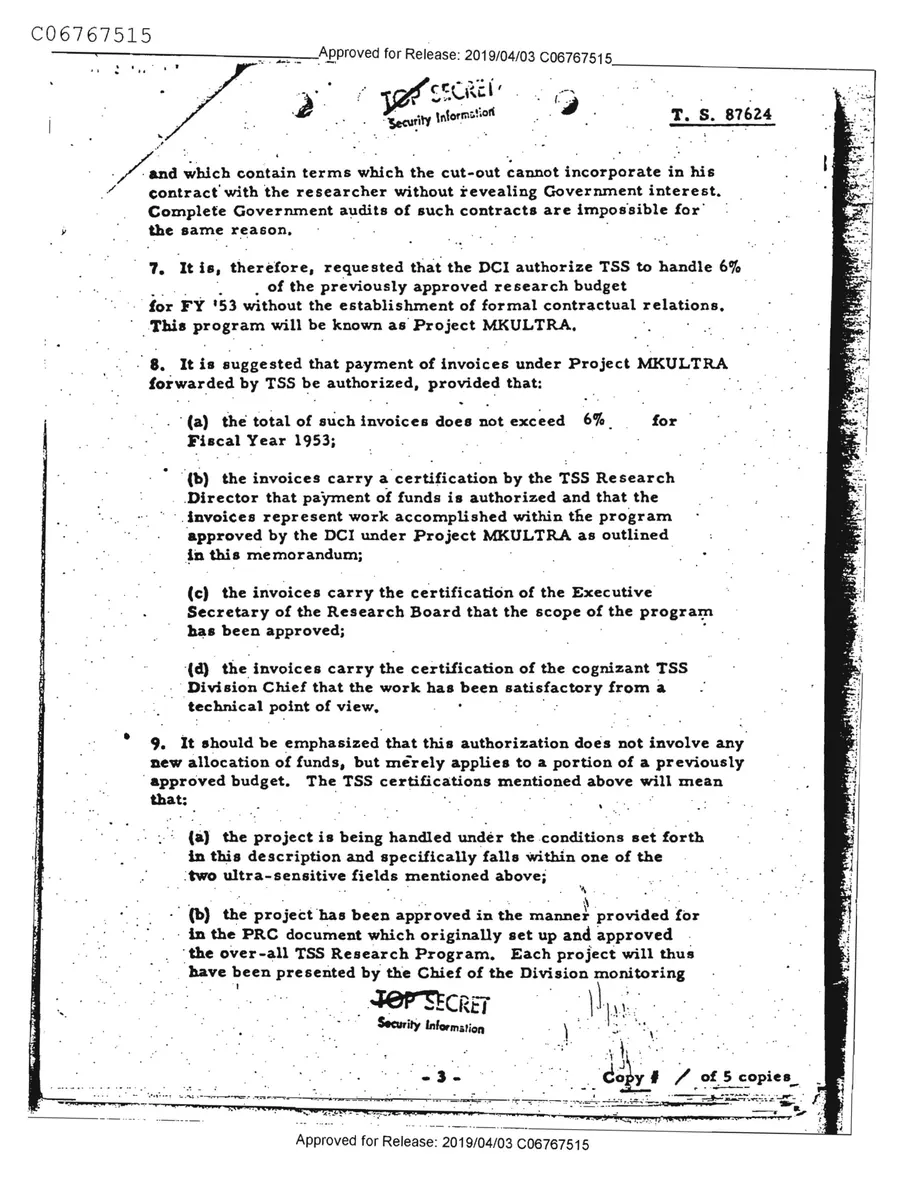
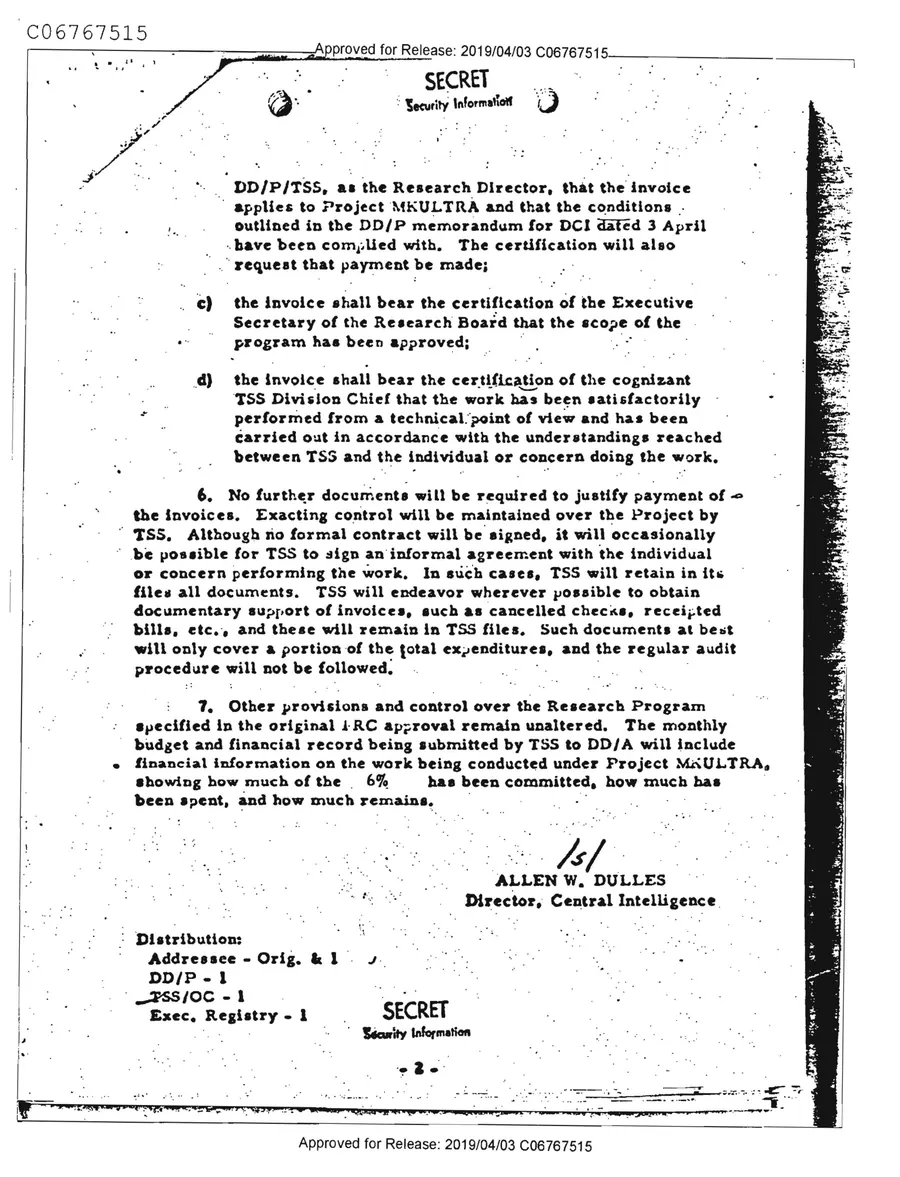
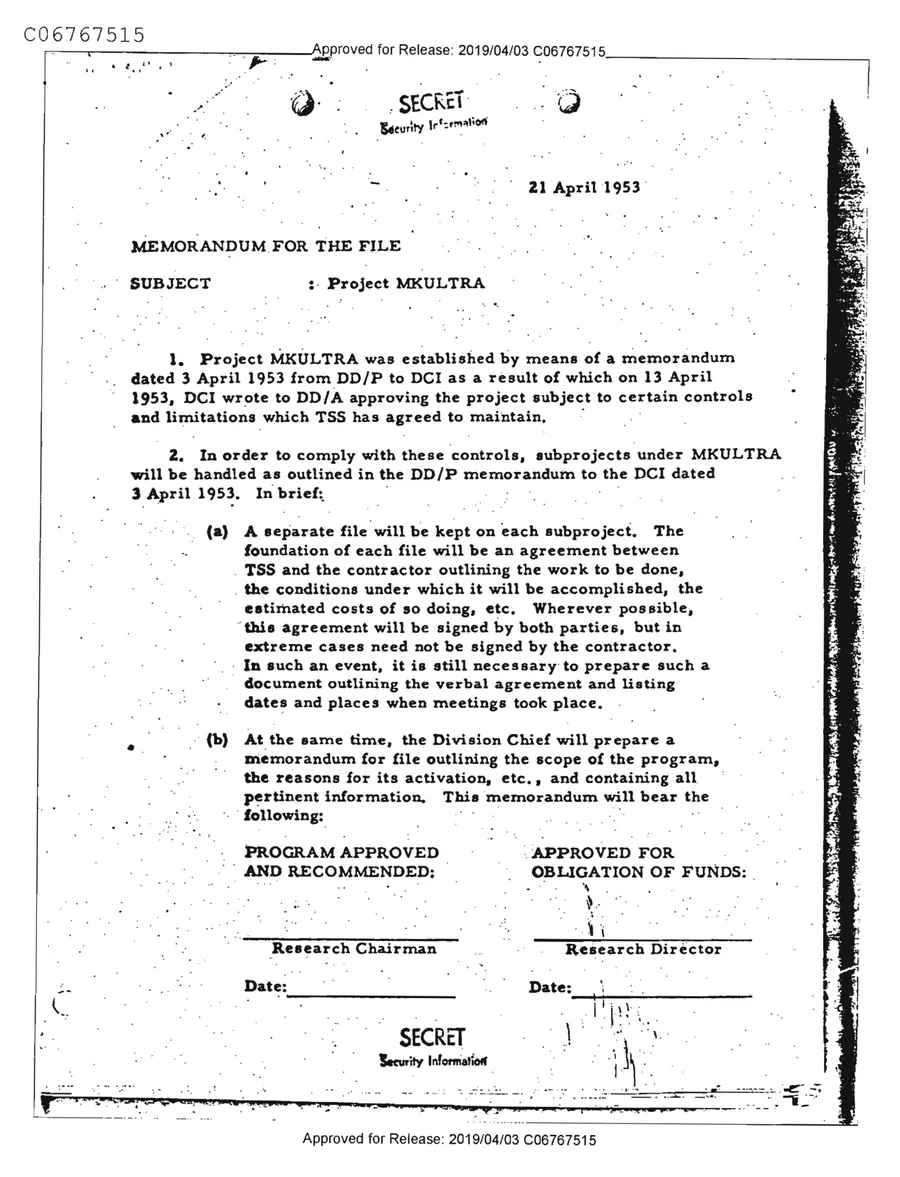
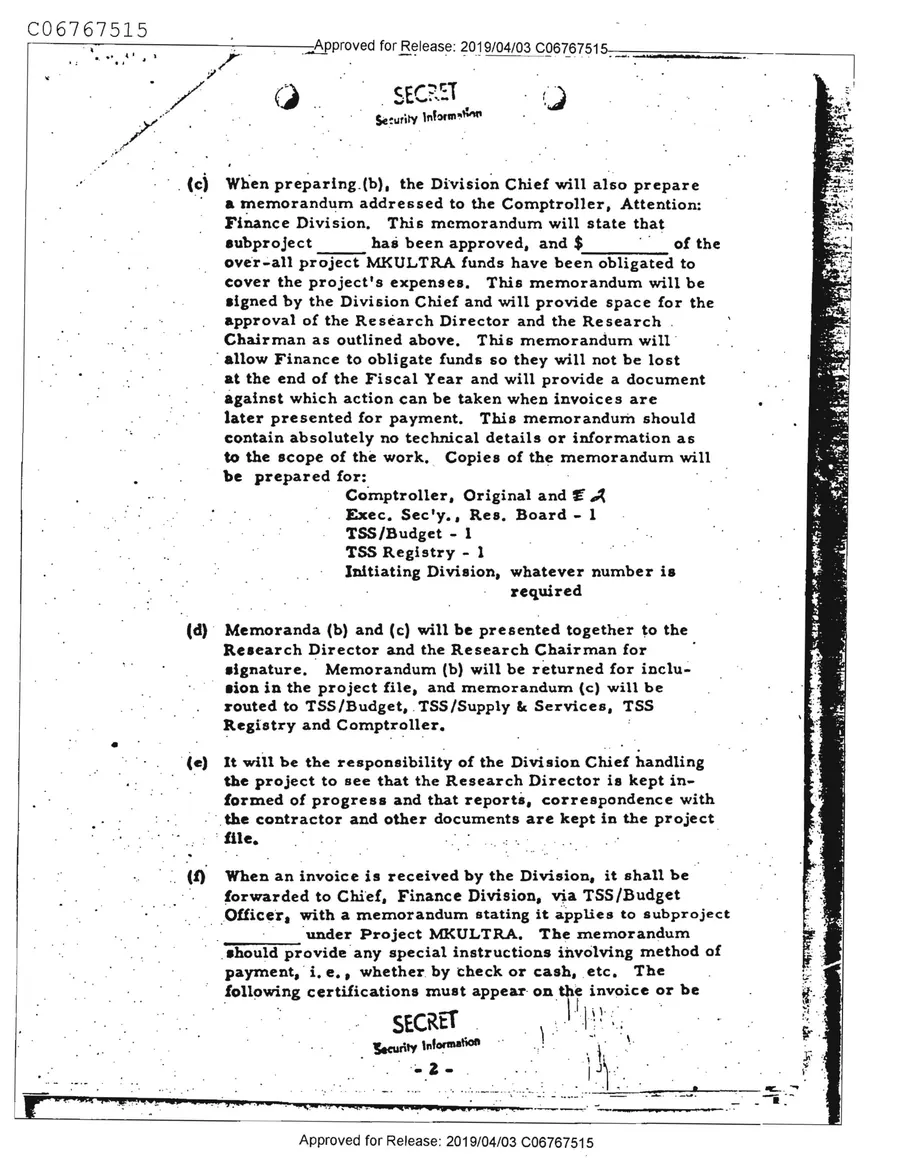
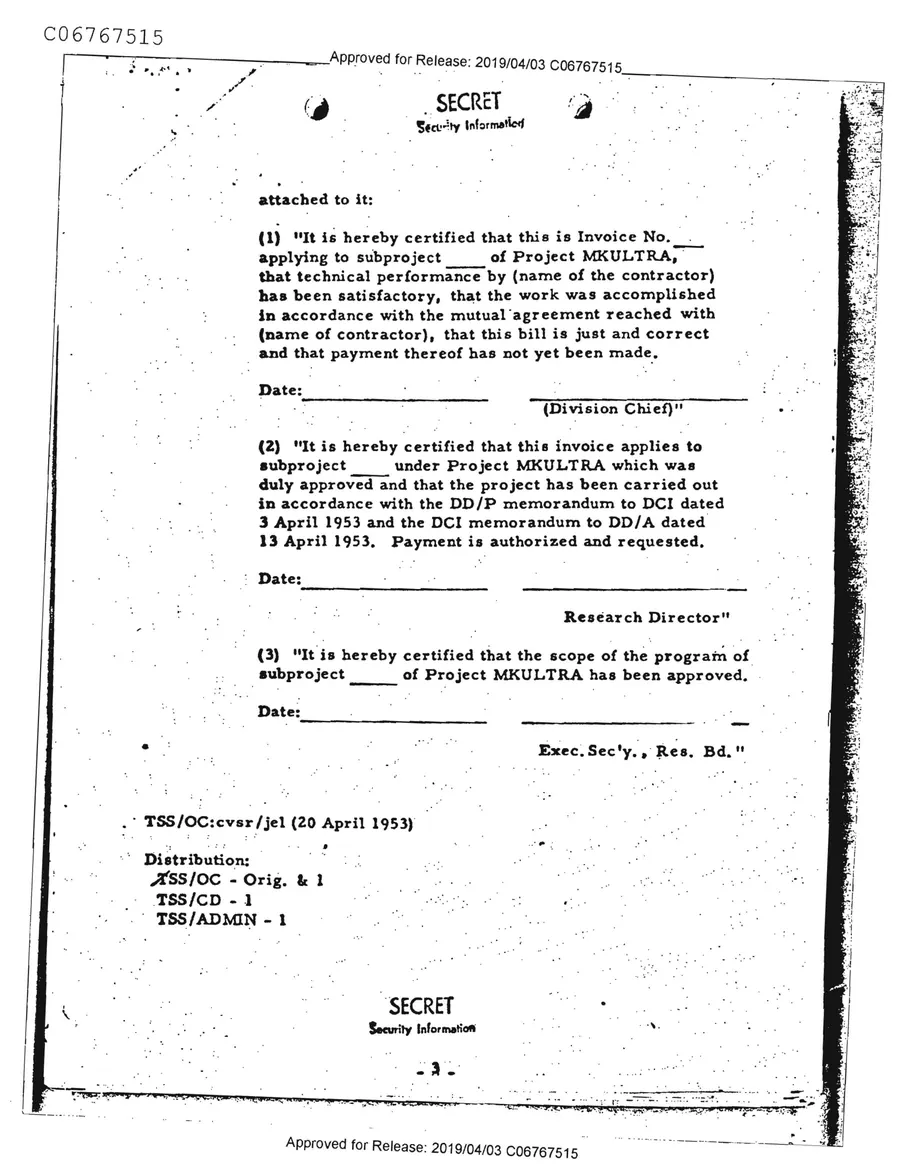
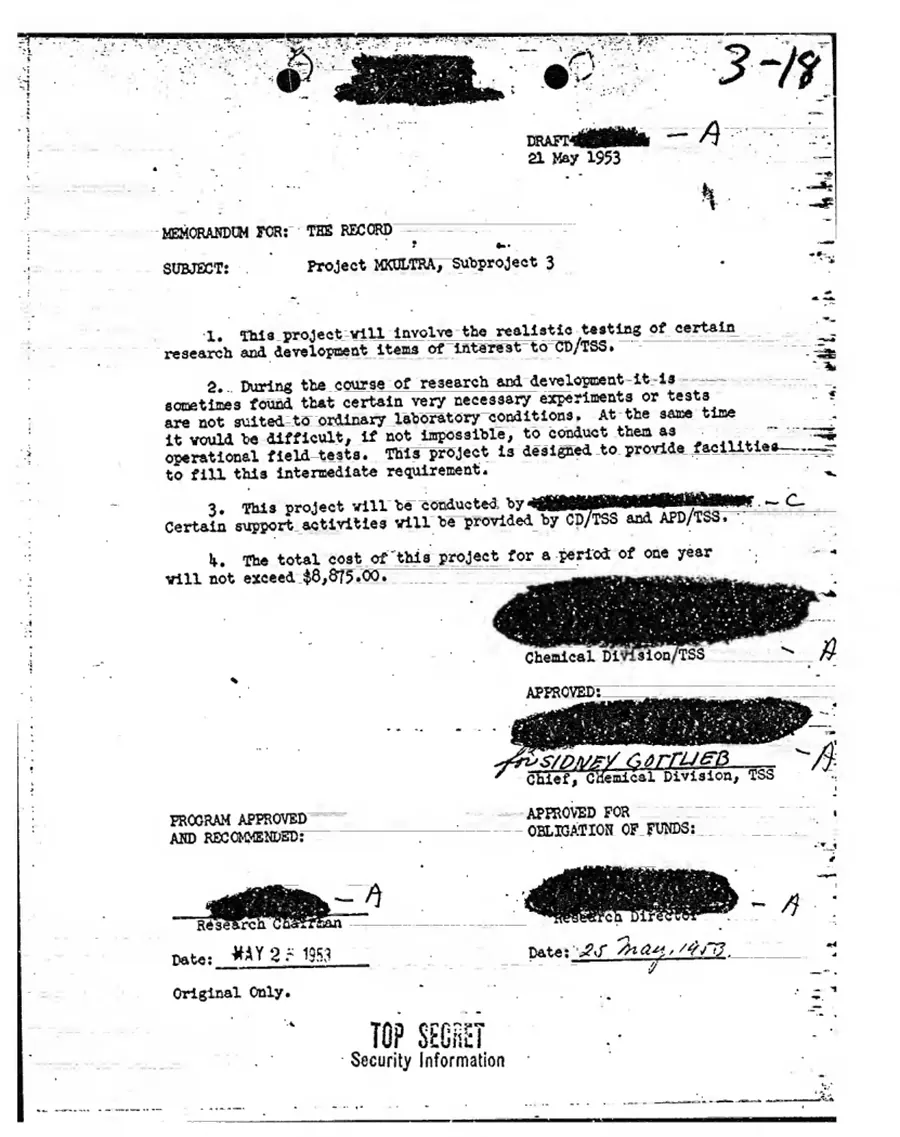
5. MKULTRA was authorized by the then Director of Central Intelligence, Mr. Allen W. Dulles, in 1953. The TSD was assigned responsibility thereby to employ a portion of its R&D budget, eventually set at 20%, for research in behavioral materials and [redacted] under purely internal and compartmented controls, (further details are provided in paragraph 3 of the attached report). Normal procedures for project approval, funding, and accounting were waived. However, special arrangements for audit of expenditures have been evolved in subsequent years.
Ser A cy 2 of 6
Textual notes on this leaf (7)
- Ser A cy 2 of 6
- Handwritten notation at the lower right, partly over the typed 'TS 185209/1'. Read as 'Ser A cy 2 of 6' (series A, copy 2 of 6?); the first word could equally be a signature flourish, and '2' and '6' are read from a cursive hand. CONFIRM.
- [illegible] faint boxed stamp
- A faint dotted-outline rectangle with a few illegible strokes sits above 'MEMORANDUM FOR:' at the left, beneath the classification stamp. It is an inked impression too faint to read at 300 dpi; recorded as a stamp, not transcribed. CONFIRM whether any text is recoverable from the 1977-era copy (DOC_0000017748 p1).
- also cover [redacted] [redacted] The administration
- Boxes 2 and 3 form one withheld passage running from the end of line 4 into line 5 of para 4. The full stop that should close the withheld sentence is under the box; none is visible. To the LEFT of box 3, at the start of line 5, a short smear of whited-out typing shows as faint broken strokes - the trace of text, not readable, and not read. The marginal citations print twice, once per line: the upper pair reads '(b)(1)' over a SECOND citation whose top is clipped by the black band and whose visible remainder reads as '(h)(3)' - recorded as printed '(b)(3)' on the presumption it is the same citation as the pair below; the lower pair reads '(b)(1)' '(b)(3)' cleanly. CONFIRM the clipped citation.
- materials.
- The full stop after 'materials' at the end of para 4 line 3 prints hard against the right margin; a stray mark beside it. Read as a plain full stop. CONFIRM.
- compartmented controls, (further details
- A comma precedes the opening parenthesis. The document's own punctuation. PRESERVED.
- TOP SECRET / SECRET
- At head and foot the 'TOP SECRET' stamp is struck through by hand with a single diagonal stroke and 'SECRET' is stamped beneath it - the downgrade recorded on the page. Recorded as stamps, not body text.
- stray mark lower left
- A small handwritten mark resembling an opening parenthesis and a dot sits in the lower left margin. Not text; not transcribed.