



THE DECLASSIFIED
COLLECTION
Cart 0

Linen hardcover · $49

Cart 0

CIA · MKULTRA · MIDNIGHT CLIMAX

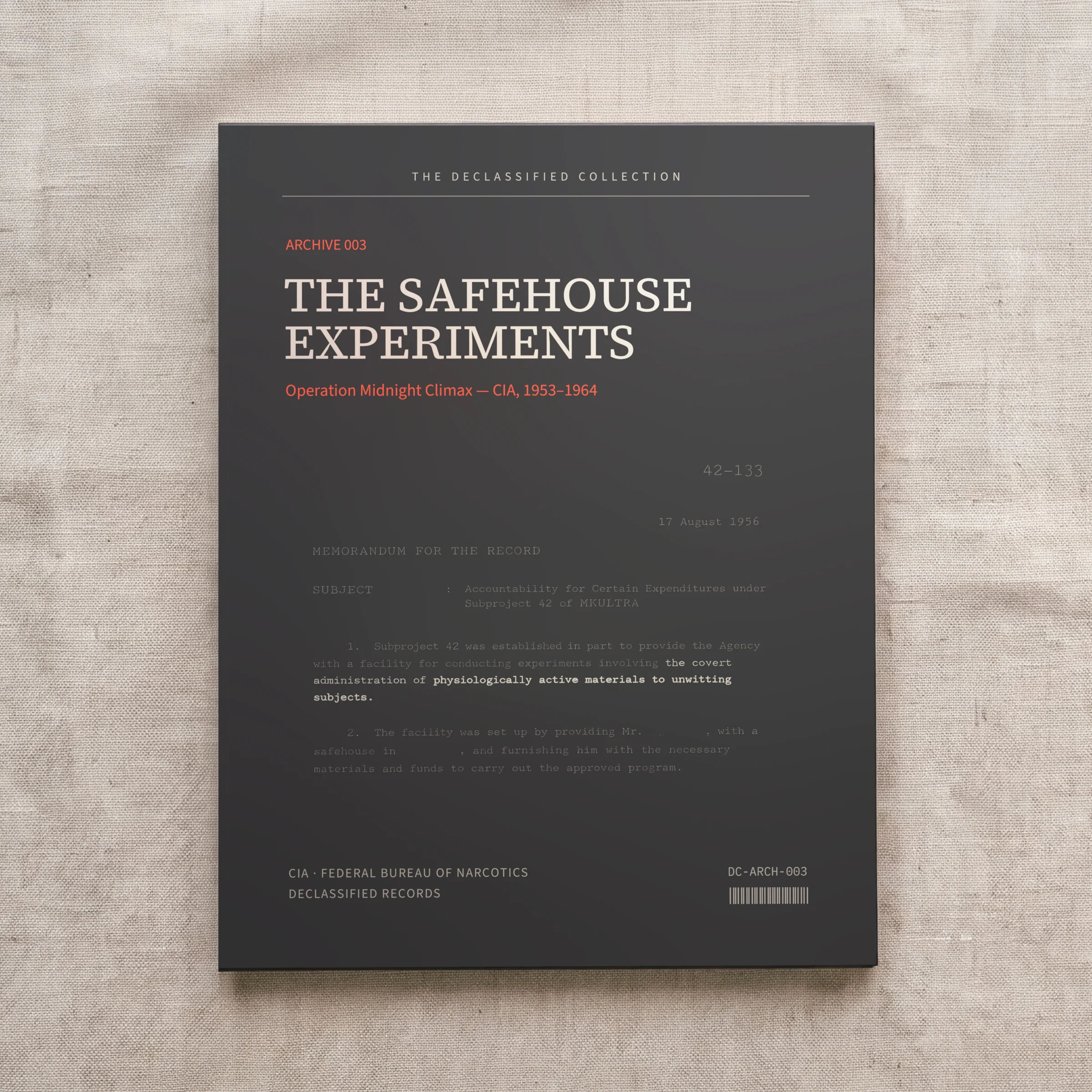
The Safehouse Experiments

The CIA paid for the apartments and recording equipment. The people given the drugs did not know they were part of an experiment.

The released record made readable: the original pages beside their transcription, with 135 notes and 28 photographs. Not a printout.

Annotated archival edition · Linen hardcover, 8½ × 11 in.

Choose a format

Two or more books ship free in the US (you save $13.90 on two). Three or more also take $10 off (you save $30.85 on three).

30-day returns for a full refund, no reason needed. Damaged copies replaced free. Returns policy

Payment is taken on Whop’s secure checkout. We never see your card, and Whop is the name on your card statement.

Prices could not be loaded just now. Please try again in a moment.

Ships to United States · Standard Change
Quantity
1
Shipping

Both print editions hold every page, transcription, note and photograph, in full color.

Ebook + audiobook included with either print edition.

Inside
272 pages · 272 pages · 135 notes · 28 photographs
Size
8½ × 11 in. · 8½ × 11 in.
Made of
Navy linen boards, gold-foil spine, matte dust jacket · Matte soft cover · printed in full color
Price
Launch price $49 (regular $65 from January 1) · Launch price $35 (regular $50 from January 1)
Shipping
US standard $6.95 for one book. Two or more books ship free.
Printing
Printed to order. Printing usually takes one to two weeks, and then the parcel travels.

Printed and bound in the USA (US orders)

Explore the story

BETWEEN THE COVERS

Inside this edition.

The source record, its historical setting, and our writing—gathered into one volume, in linen hardcover or paperback.

Contents of the edition
In every editionWhat you’ll find
Documents81 source leaves
  • MKULTRA Subprojects 3, 16 and 42; the 1963 inspection and related memoranda.
  • The operating paper trail of unwitting drug experiments, with facsimiles and transcription.
Photographs28 photographs
  • Archival images of the people, places and institutions behind the record.
Our writingContext & annotations
  • Introduction and 135 publisher annotations.
  • Context, people and the record’s later history; textual notes, plus an account of gaps in the surviving record.

ABOUT THIS EDITION

The apartments had budgets. The subjects had no idea.

01

An experiment hidden in ordinary rooms

Furniture inventories, recording equipment and annual expenses: the safehouse files begin with the practical details of keeping apartments running. Those rooms also hosted CIA drug tests on people who did not know they were subjects. The contrast gives the record its force. An extraordinary abuse appears through the familiar paperwork of equipment, funding and administration.
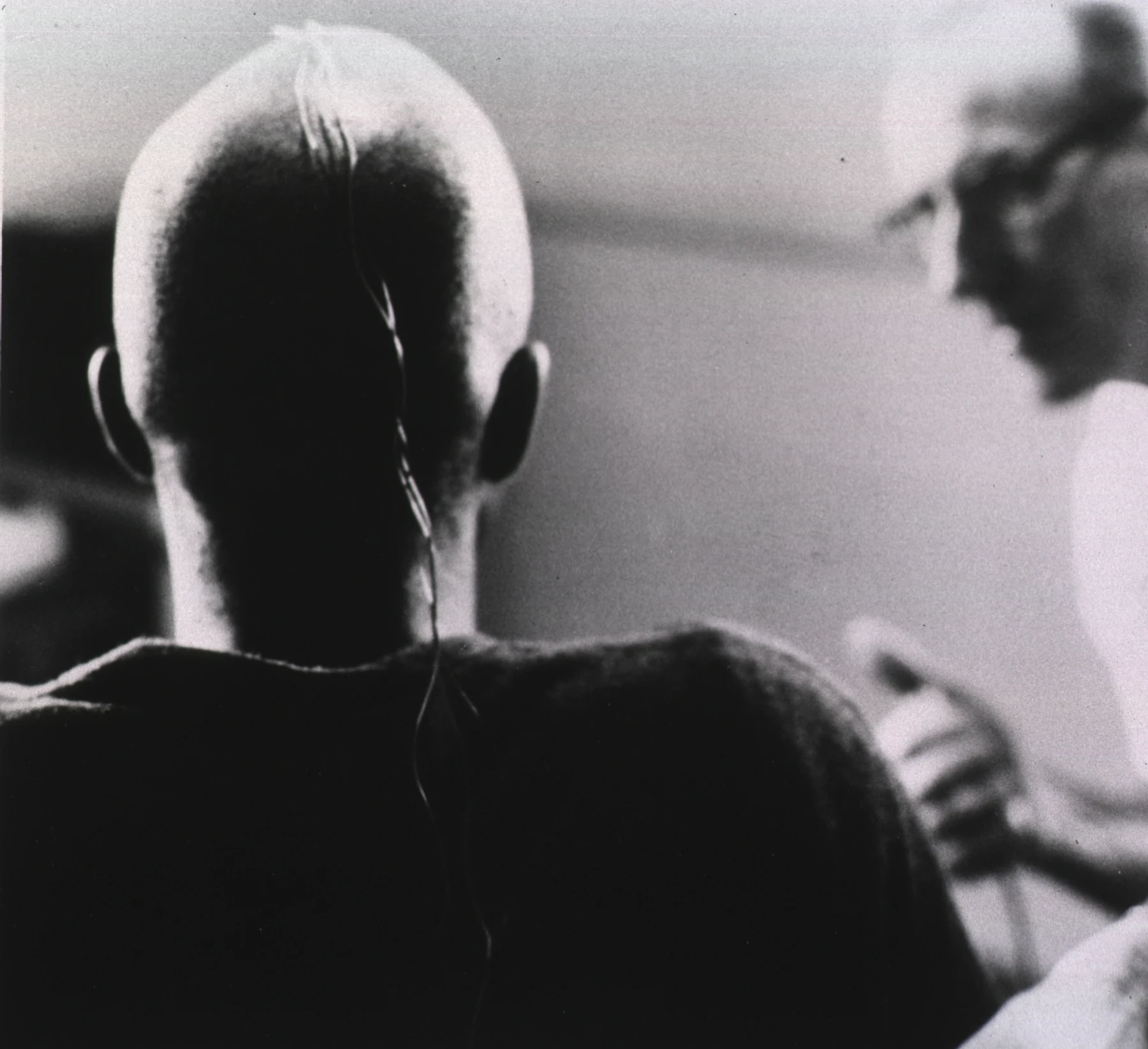
A man seen from behind wears recording electrodes while a researcher faces him at the Lexington Addiction Research Center.
01
Drug research at the Addiction Research Center, Lexington, Kentucky, circa 1965.Addiction Research Center, U.S. Public Health Service. Courtesy National Library of Medicine.Source record ↗

02

Follow the money and the objections

The files of MKULTRA Subprojects 3, 16 and 42 trace that machinery. A 1956 memorandum explains why receipts could not be required for certain expenditures. The 1963 Inspector General inspection brings unwitting testing into sharper focus, while related memoranda preserve the internal dispute over stopping it. The program's own paperwork supplies both its operating details and its warnings.
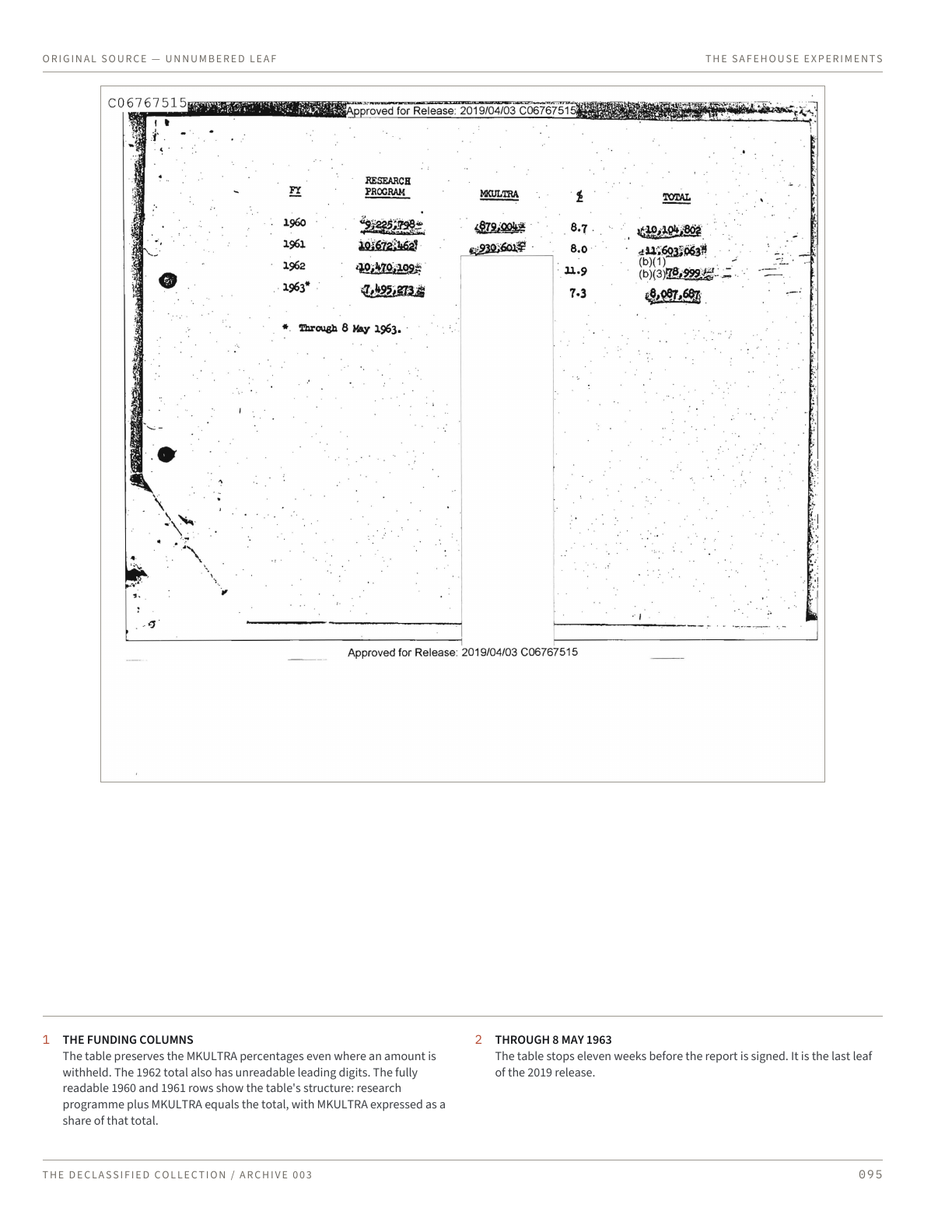
MKULTRA’s redacted funding table
02
MKULTRA’s redacted funding table.Source facsimile in The Declassified Collection edition.

03

The paperwork returned

The financial trail outlived other MKULTRA files that had been destroyed. Its later discovery brought the program back before the Senate in 1977. Officials now had to account publicly for work that had once been supported through secret budgets and exceptions to ordinary receipts. The safehouses had produced a second, unintended record: the accounting paperwork through which the experiments could be investigated.
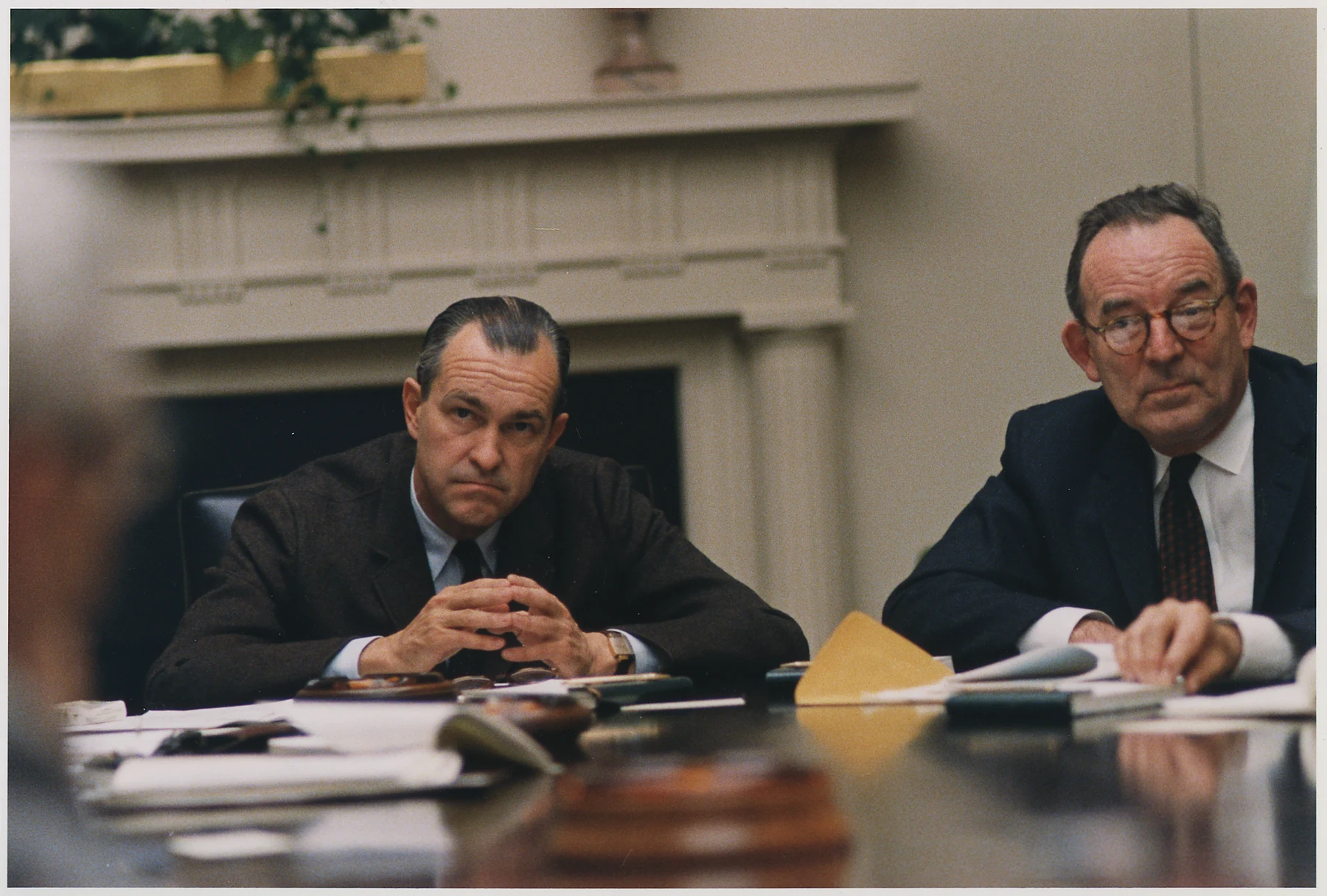
Richard Helms at a Cabinet Room meeting with Ambassador Walworth Barbour.
03
Richard Helms in the Cabinet Room, 27 March 1968.Yoichi R. Okamoto / White House Photographic Office. Courtesy LBJ Presidential Library / National Archives.Source record ↗
Sources behind the story

THE EDITION

A physical home for the record.

The original pages, readable presentation and context you can return to.

Formats
Linen hardcover · Paperback
Size
8½ × 11 in. pages (8¾ × 11¼ in. outside) · 8½ × 11 in.
Covers
Navy linen boards, gold-foil spine, matte dust jacket · Matte soft cover
Printing
Printed in full color
Contents
Every page, note and photograph in both
Digital companions
Ebook + audiobook
Source treatment
Original facsimiles
Reading support
Transcription & 135 publisher notes
Interior & extent
272 pages · 272 pages
Photographs
28 photographs
How we make the editions

30-day returns for a full refund, no reason needed. Damaged copies replaced free. Returns policy

01

The original

Source pages with their provenance visible.

02

The readable edition

Transcription where permitted; publisher notes kept distinct.

03

The wider picture

Relevant archival photographs, each with its source.

EXPLORE THE EDITIONS

The collection.

The full collection: covers, titles and stories
CoverTitleThe story
ARCHIVE 001The Gateway ProcessThe Army studied how to "escape even the restrictions of time and space." Page 25, missing from the CIA's released copy, is where the report reaches the Hebrew Tree of Life, the universal hologram, and Gateway as "a portal." We print it in full with the omitted and out of order pages restored.
ARCHIVE 002Project StargateCould someone describe a place they could not see? The CIA asked two scientists, then the officers who had used it.
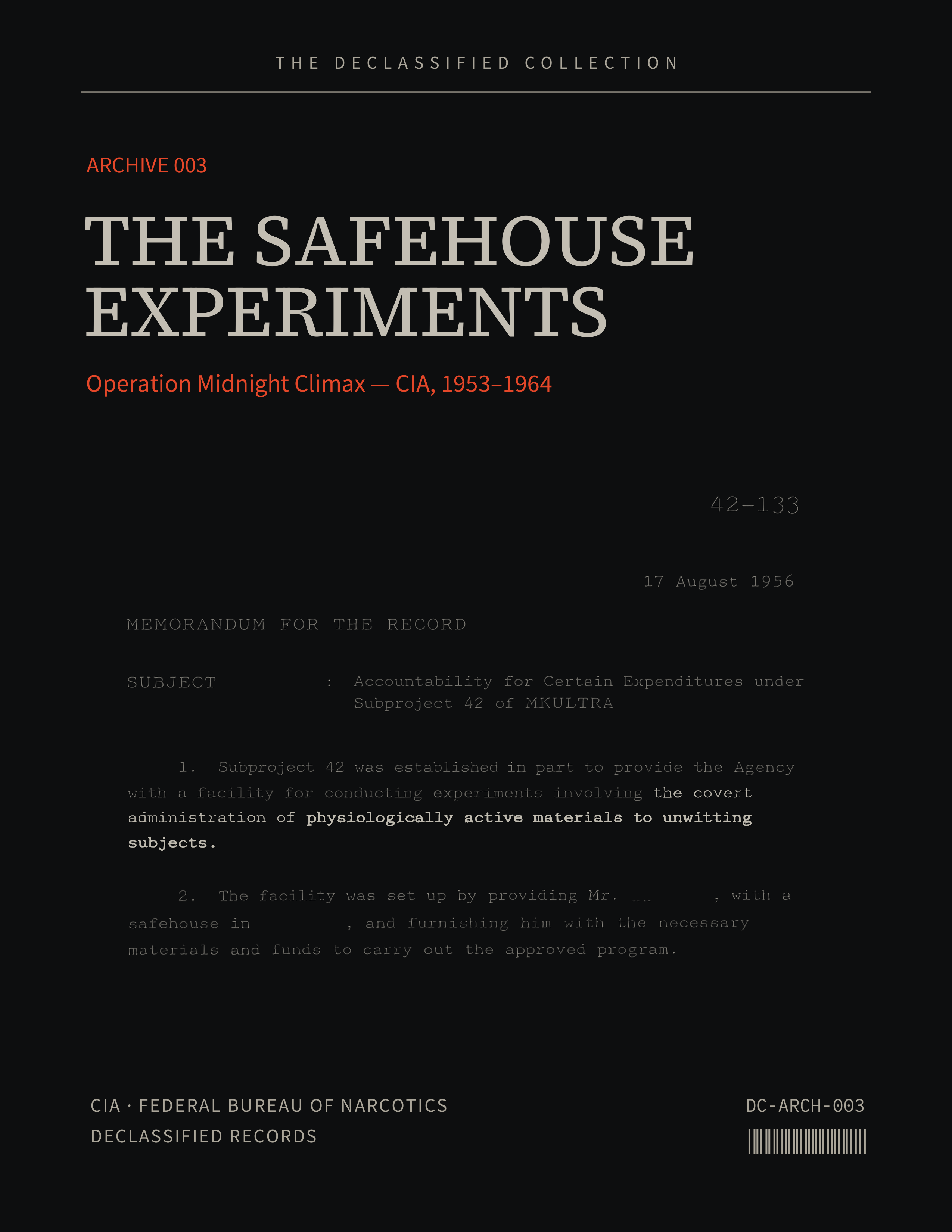
ARCHIVE 003The Safehouse ExperimentsYou’re viewing this editionThe CIA paid for the apartments and recording equipment. The people given the drugs did not know they were part of an experiment.
ARCHIVE 004The Frank Olson FilesThe CIA secretly gave Frank Olson LSD, then recorded a “direct causal connection” between the experiment and his death. His family did not learn of the drugging until 1975.
ARCHIVE 005MKULTRA: MontrealFifteen hours of repeated messages a day, followed by prolonged sleep. A CIA summary tied the research to a Montreal psychiatrist and $60,000 in cashier's checks.
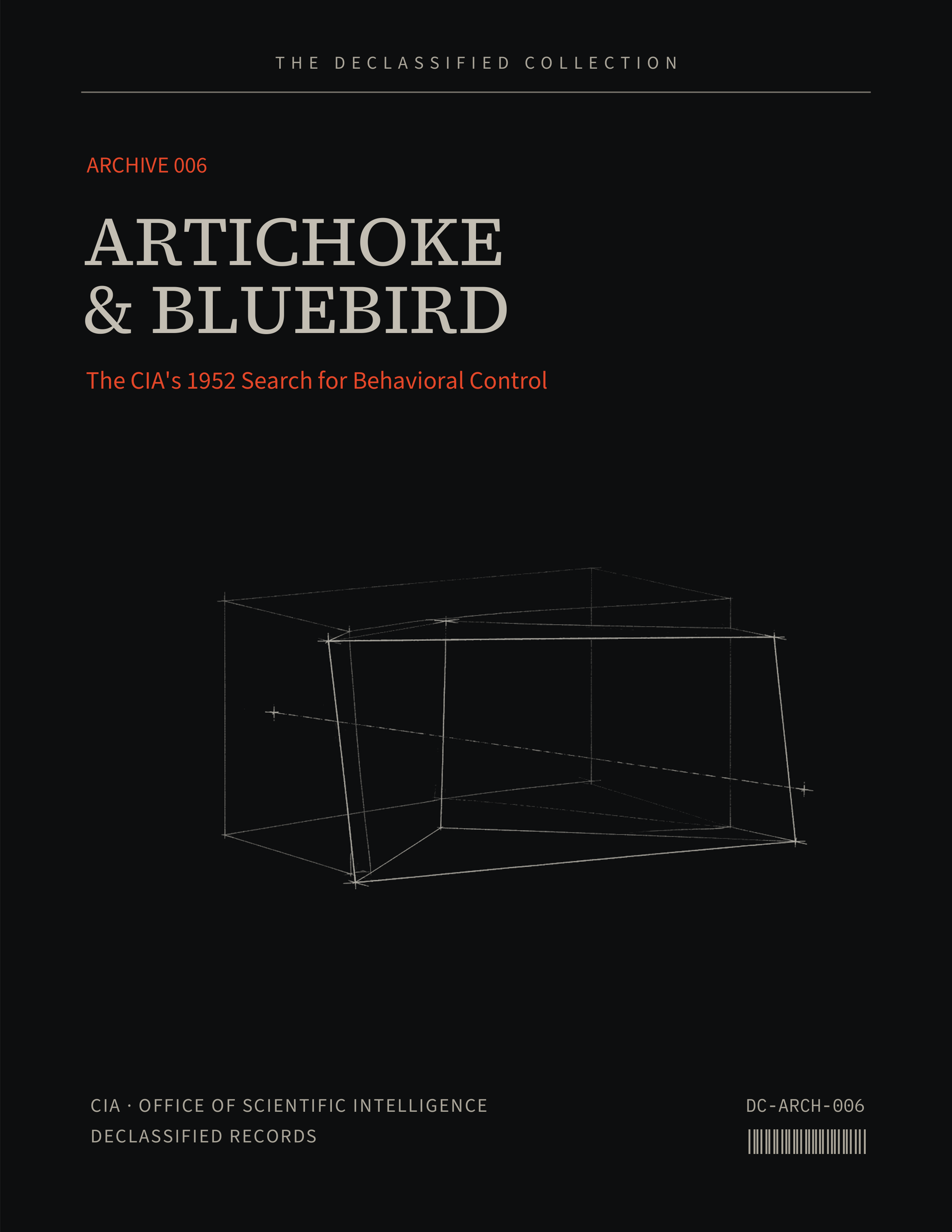
ARCHIVE 006Artichoke & BluebirdA psychiatrist, an equipment list and a secret budget. Before MKULTRA, the CIA was already organizing its search for behavioral control.
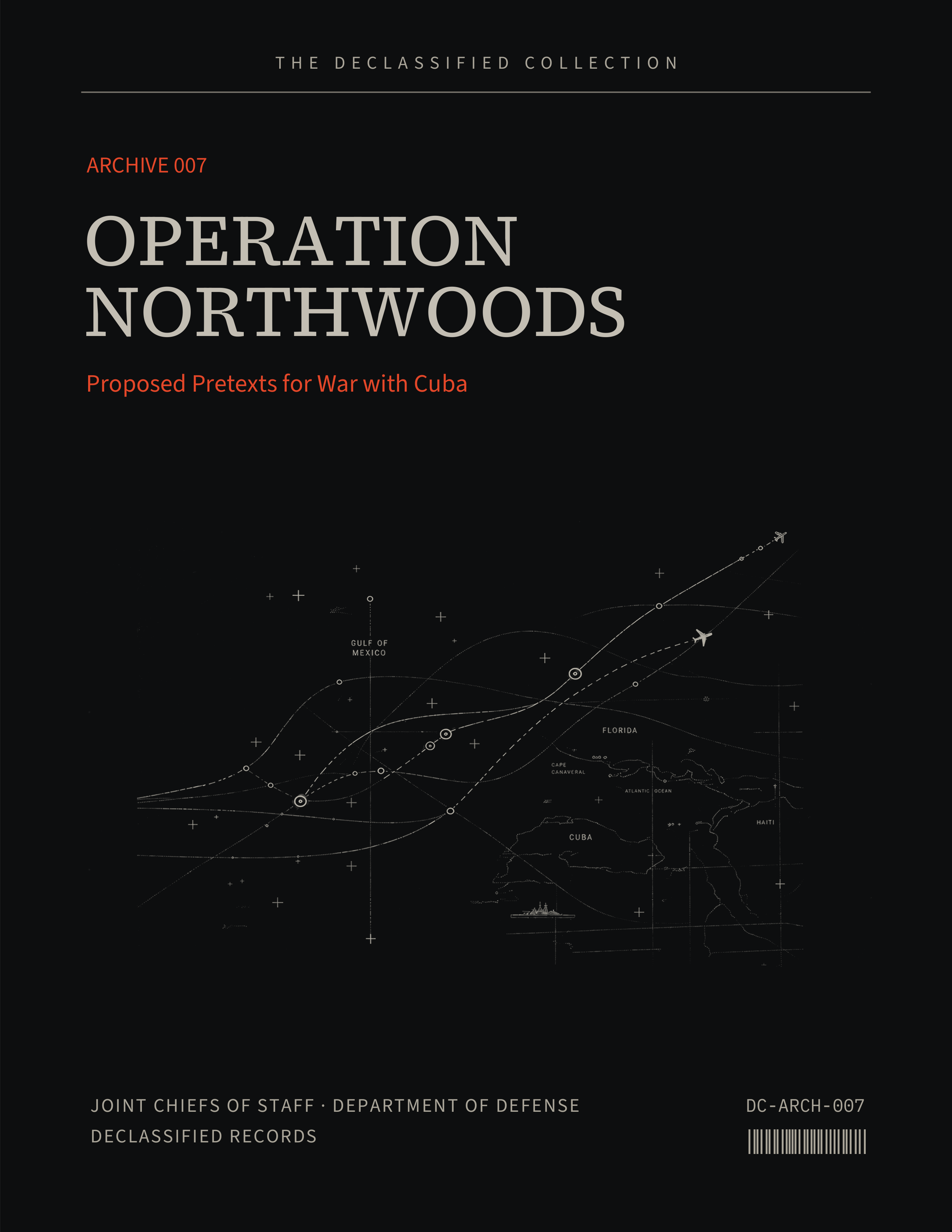
ARCHIVE 007Operation NorthwoodsA ship explosion, a distress call, an unmanned airliner. The Joint Chiefs put proposed pretexts for war with Cuba in writing.
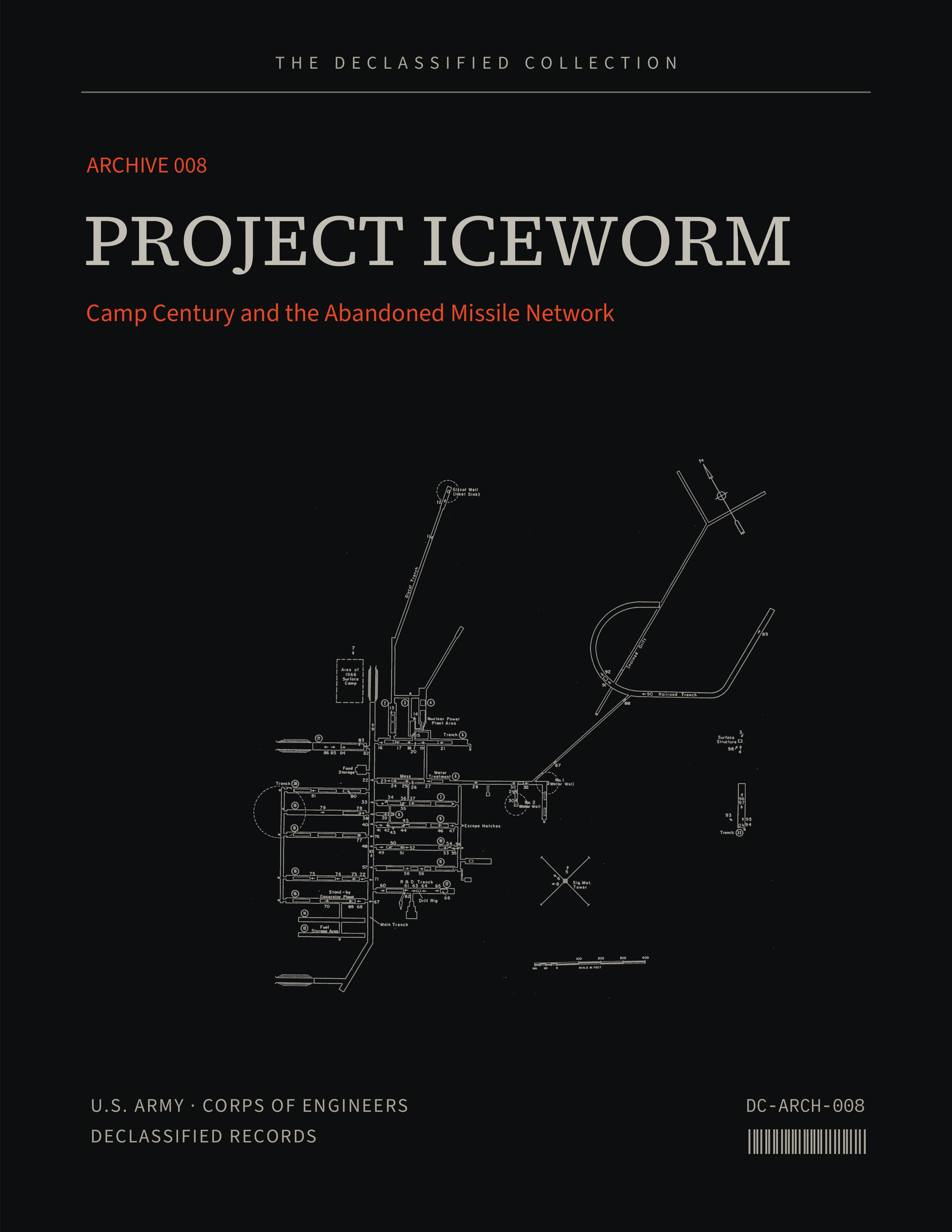
ARCHIVE 008Project IcewormThe Army built a camp beneath Greenland's ice and powered it with a nuclear reactor. Then it had to keep the place working inside a moving ice sheet.
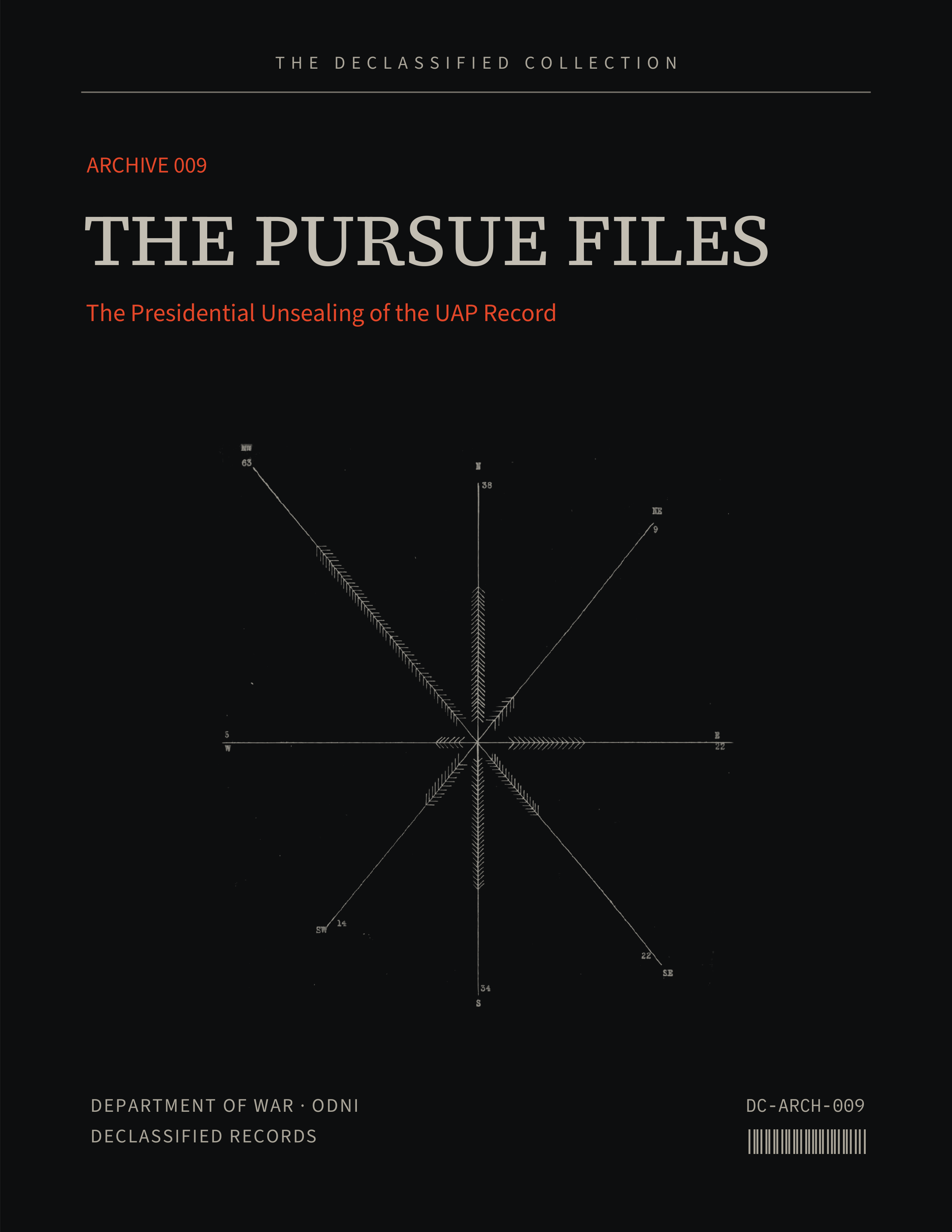
ARCHIVE 009The PURSUE FilesA sighting form, a reel of film, an official assessment. Follow the paperwork that turned strange objects in the sky into a government investigation.
ARCHIVE 010Project SunshineTo measure nuclear fallout, the government collected human bones, including children's. Its scientists discussed how to obtain them while a stenographer took notes.

A FEW GOOD QUESTIONS

Before it goes on your shelf.

Which files does the book follow?

The 1963 Inspector General inspection, the papers of safehouse Subprojects 3, 16 and 42, and later investigative records.

Why is this also known as Midnight Climax?

Operation Midnight Climax is the later name associated with the safehouse program. The folders themselves are filed under numbered MKULTRA subprojects. The edition distinguishes that familiar name from the language on the original pages.

Why own this if the record is available online?

For a readable edition you can live with: original pages, transcription where rights permit, contextual notes and photographs, gathered into a physical book. You are buying the edition—not exclusive access to public records.

Linen hardcover or paperback?

Linen hardcover, launch price $49 (regular $65 from January 1): 8½ × 11 in., navy linen boards, gold-foil spine, matte dust jacket. Paperback, launch price $35 (regular $50 from January 1): 8½ × 11 in., matte soft cover. Both are printed in full color and hold every page, transcription, note and photograph.

What comes with a print edition?

Each print edition, linen hardcover or paperback, includes this book's ebook and audiobook. The digital edition on its own is for reading and listening without a physical copy.

How do multi-book orders work?

Free standard shipping on two or more books. Three or more also take $10 off the order. Any mix of titles and editions counts, by quantity. Digital editions do not count toward either.

What about shipping and returns?

We ship to the United States and 57 other countries. Orders of two or more books ship free by standard shipping, wherever they go. A single book ships for $6.95 by standard shipping in the United States; elsewhere it pays the printer’s standard rate for that country. Where the printer offers expedited shipping for your address, you can choose it for an added charge. You see the shipping cost before you pay.

You can return a book within 30 days of delivery for a full refund of the purchase price. Write to us first, then send it back. If a book arrives damaged, misbound or misprinted, we replace it free and you send nothing back.

Shipping & returns →

Not available here.