THE DECLASSIFIED
COLLECTION
Cart 0

U.S. ARMY · CAMP CENTURY · GREENLAND

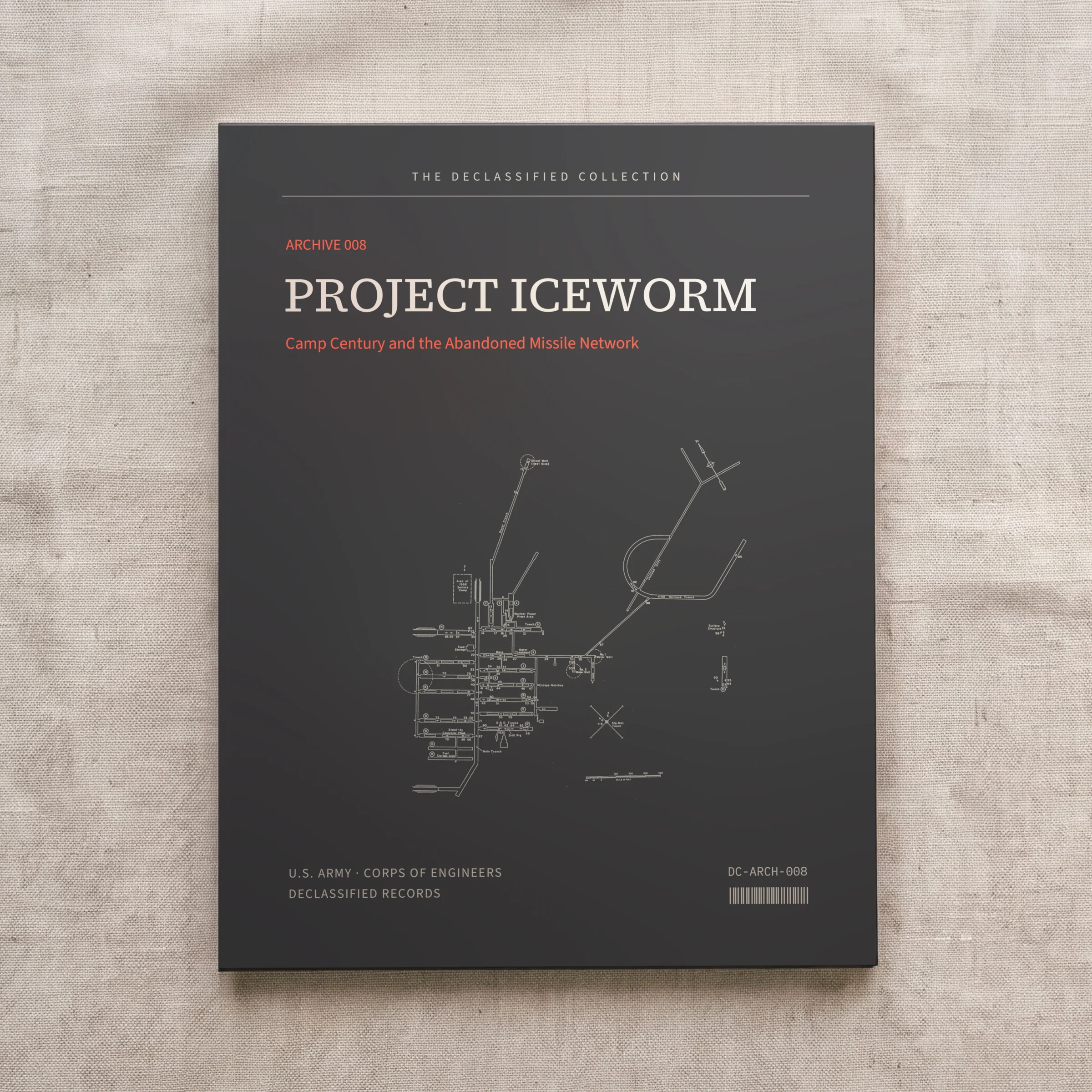
Project Iceworm

The Army built a camp beneath Greenland's ice and powered it with a nuclear reactor. Then it had to keep the place working inside a moving ice sheet.

Annotated archival edition · Linen hardcover, 8½ × 11 in.

Choose a format

Both print editions hold every page, transcription, note and photograph, in full color.

Explore the story

TAKING SHAPE

Planned for this edition.

This edition is in production. These are its planned contents.

Planned contents
In every editionWhat you’ll find
DocumentsPlanned selection
  • The Army’s Camp Century engineering account, with its plans and technical illustrations.
  • The separate missile-network study is outside this report.
ImagesSelection in progress
  • Historical photographs and source illustrations to accompany the documents.
Our writingIn preparation
  • An introduction, explanatory notes and historical context.

ABOUT THIS EDITION

How do you build a camp inside moving ice?

01

A place that sounds impossible

Beneath Greenland's ice, the U.S. Army built Camp Century: tunnels, living quarters and a nuclear reactor. The engineering record turns that startling description into a practical account of design, construction and performance. It asks how a camp could function underground when the material surrounding it was itself moving.
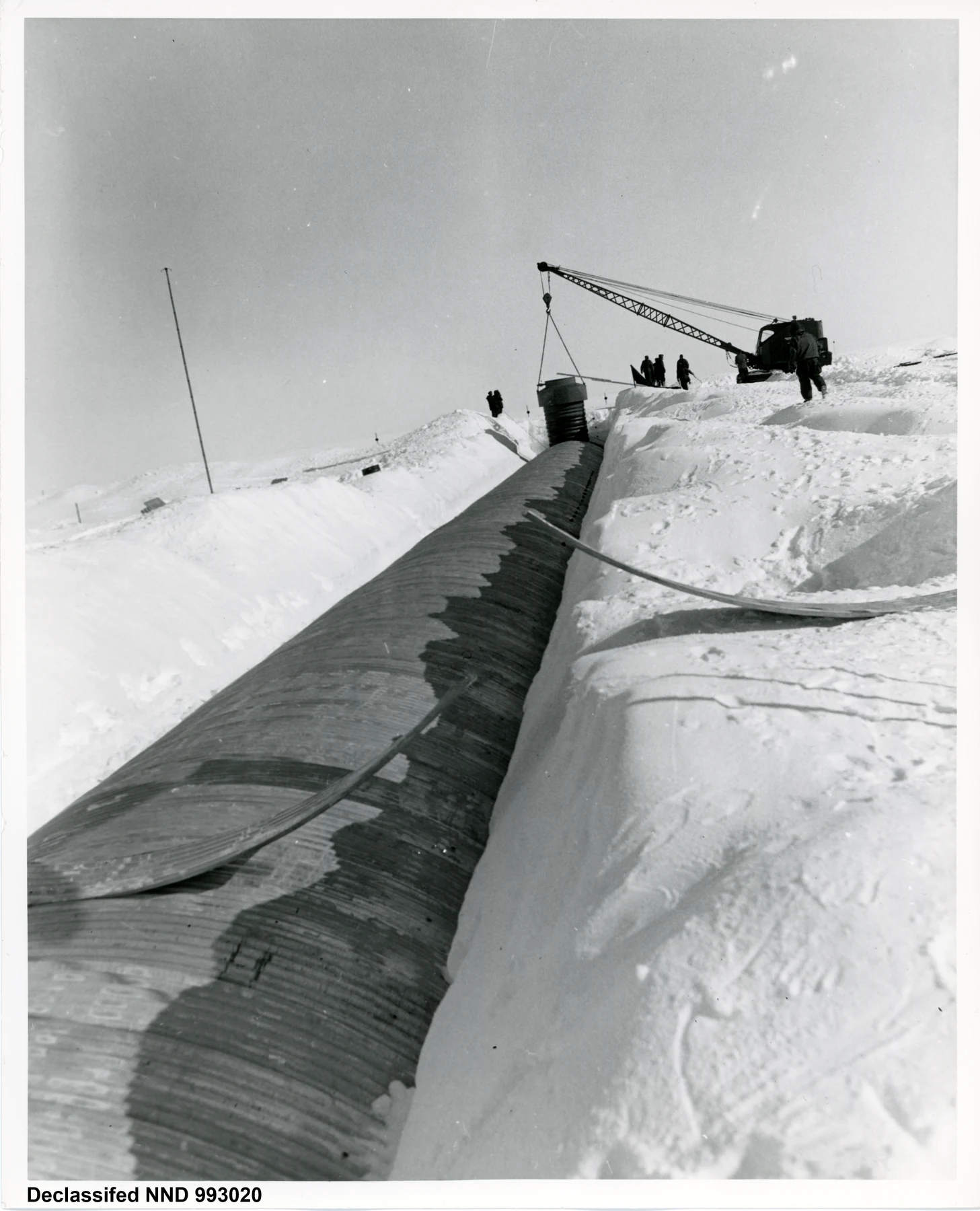
Corrugated steel arches line an excavated trench at Camp Century.
01
Steel arches inside a construction trench at Camp Century, Greenland. Source photograph for the planned edition.SP-4 Ronald Kuntz / U.S. Army. National Archives.Source record ↗

02

The camp in photographs and diagrams

The PM-2A reactor supplied nuclear power to the camp. Photographs and diagrams in the Army's engineering record turn the setting into something tangible: construction, tunnels, living spaces and the structures that made an undersnow camp possible. The report follows the project through design and performance, with the moving ice itself part of the engineering problem.

03

The camp in its own engineering record

Published in October 1965, the Camp Century report gives this planned edition its documentary center. The separate missile-network study lies outside its scope. Here the extraordinary project was already built: an Army camp beneath Greenland, with its own reactor and living quarters, being measured against the demands of the place around it. The photographs and plans preserve the scale of that undertaking.
Sources behind the story

THE EDITION

A physical home for the record.

The original pages, readable presentation and context you can return to.

Formats
Linen hardcover · Paperback
Size
8½ × 11 in. pages (8¾ × 11¼ in. outside) · 8½ × 11 in.
Covers
Navy linen boards, gold-foil spine, matte dust jacket · Matte soft cover
Printing
Printed in full color
Contents
Every page, note and photograph in both
Digital companions
Ebook + audiobook at launch
Source treatment
Original facsimiles
Reading support
Transcription & notes
How we make the editions
01

The original

Source pages with their provenance visible.

02

The readable edition

Transcription where permitted; publisher notes kept distinct.

03

The wider picture

Relevant archival photographs, each with its source.

EXPLORE THE EDITIONS

The collection.

The full collection: covers, titles and stories
CoverTitleThe story
ARCHIVE 001The Gateway ProcessThe Army studied how to "escape even the restrictions of time and space." Page 25, missing from the CIA's released copy, is where the report reaches the Hebrew Tree of Life, the universal hologram, and Gateway as "a portal." We print it in full with the omitted and out of order pages restored.
ARCHIVE 002Project StargateCould someone describe a place they could not see? The CIA asked two scientists, then the officers who had used it.
ARCHIVE 003The Safehouse ExperimentsThe CIA paid for the apartments and recording equipment. The people given the drugs did not know they were part of an experiment.
ARCHIVE 004The Frank Olson FilesThe CIA secretly gave Frank Olson LSD, then recorded a “direct causal connection” between the experiment and his death. His family did not learn of the drugging until 1975.
ARCHIVE 005MKULTRA: MontrealFifteen hours of repeated messages a day, followed by prolonged sleep. A CIA summary tied the research to a Montreal psychiatrist and $60,000 in cashier's checks.
ARCHIVE 006Artichoke & BluebirdA psychiatrist, an equipment list and a secret budget. Before MKULTRA, the CIA was already organizing its search for behavioral control.
ARCHIVE 007Operation NorthwoodsA ship explosion, a distress call, an unmanned airliner. The Joint Chiefs put proposed pretexts for war with Cuba in writing.
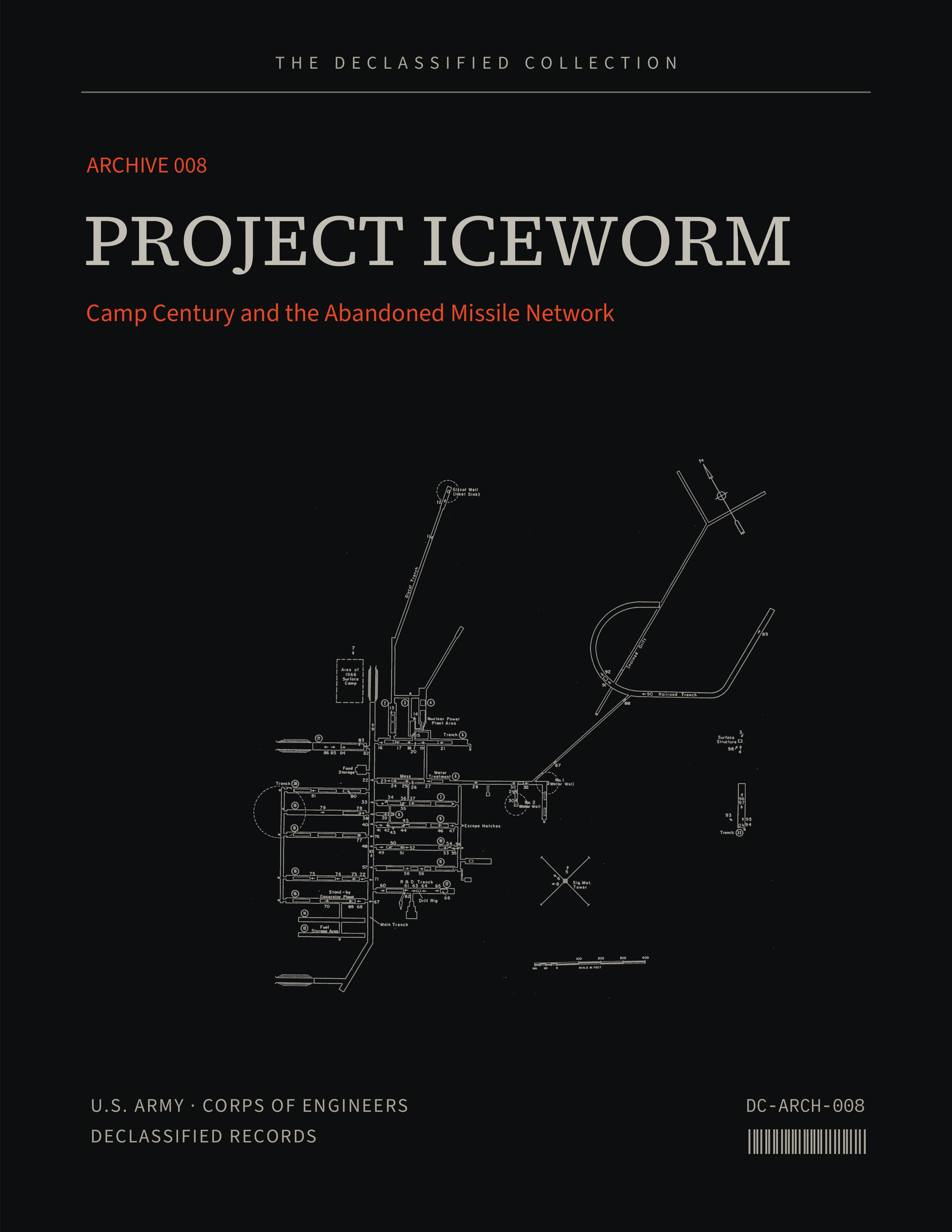
ARCHIVE 008Project IcewormYou’re viewing this editionThe Army built a camp beneath Greenland's ice and powered it with a nuclear reactor. Then it had to keep the place working inside a moving ice sheet.
ARCHIVE 009The PURSUE FilesA sighting form, a reel of film, an official assessment. Follow the paperwork that turned strange objects in the sky into a government investigation.
ARCHIVE 010Project SunshineTo measure nuclear fallout, the government collected human bones, including children's. Its scientists discussed how to obtain them while a stenographer took notes.

A FEW GOOD QUESTIONS

Before it goes on your shelf.

Why own this if the record is available online?

For a readable edition you can live with: original pages, transcription where rights permit, contextual notes and photographs, gathered into a physical book. You are buying the edition—not exclusive access to public records.

Linen hardcover or paperback?

Linen hardcover: 8½ × 11 in., navy linen boards, gold-foil spine, matte dust jacket. Paperback: 8½ × 11 in., matte soft cover. Both are printed in full color and hold every page, transcription, note and photograph.

What comes with a print edition?

Each print edition, linen hardcover or paperback, will include this book's ebook and audiobook at launch. The digital edition on its own is for reading and listening without a physical copy.

How do multi-book orders work?

Free standard shipping on two or more books. Three or more also take $10 off the order. Any mix of titles and editions counts, by quantity. Digital editions do not count toward either.

What about shipping and returns?

We ship to the United States and 57 other countries. Orders of two or more books ship free by standard shipping, wherever they go. A single book ships for $6.95 by standard shipping in the United States; elsewhere it pays the printer’s standard rate for that country. Where the printer offers expedited shipping for your address, you can choose it for an added charge. You see the shipping cost before you pay.

You can return a book within 30 days of delivery for a full refund of the purchase price. Write to us first, then send it back. If a book arrives damaged, misbound or misprinted, we replace it free and you send nothing back.

Shipping & returns →

Not available here.