




ABOUT THIS EDITION
An admission kept from the family.
01
The secret inside the official story
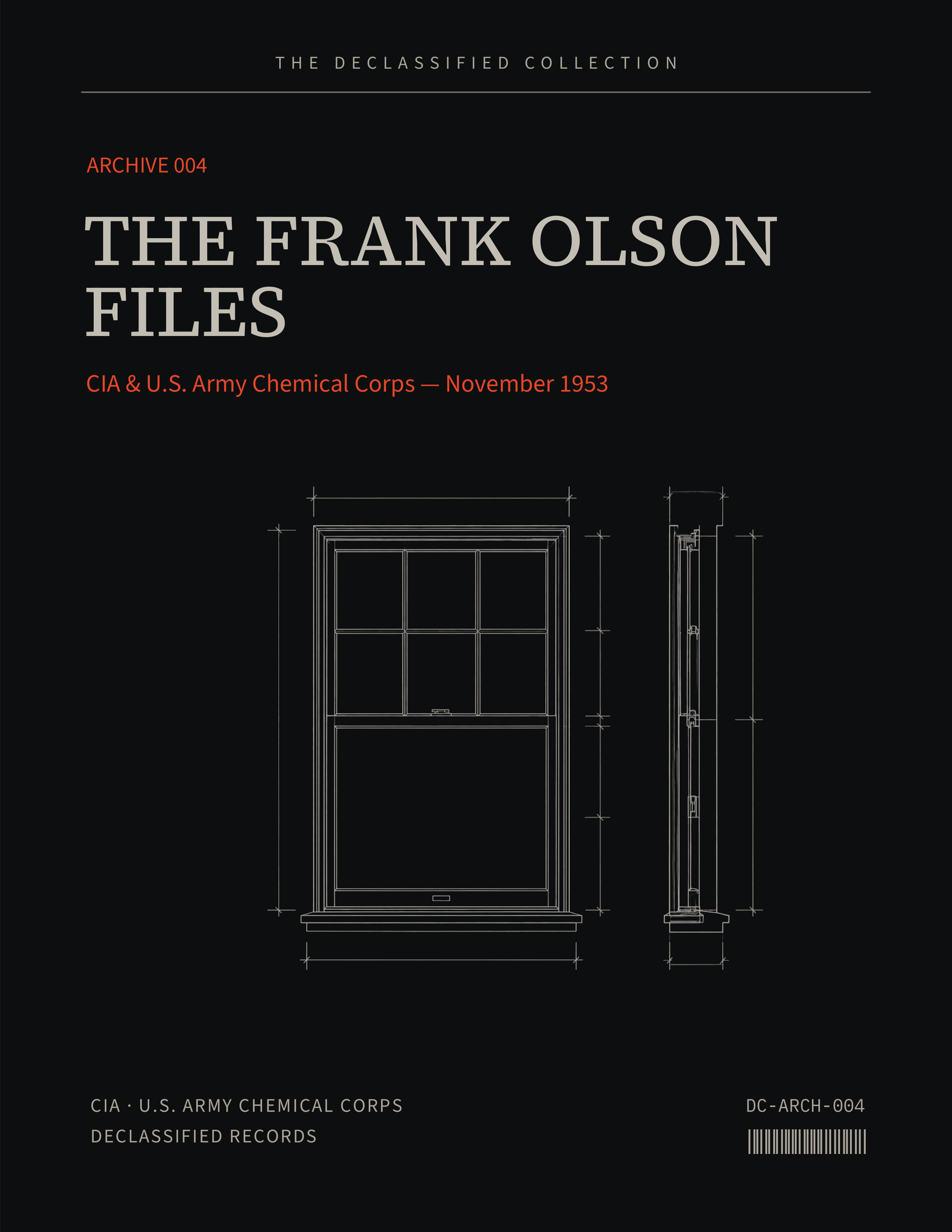
On 28 November 1953, Frank Olson died after falling from a window of New York's Statler Hotel. He was an Army biochemist working with the CIA. The official account treated his death as suicide. It left out a fact his family would not learn for twenty-two years: CIA personnel had secretly given him LSD at a work meeting days before his death.
02
What the agency already knew
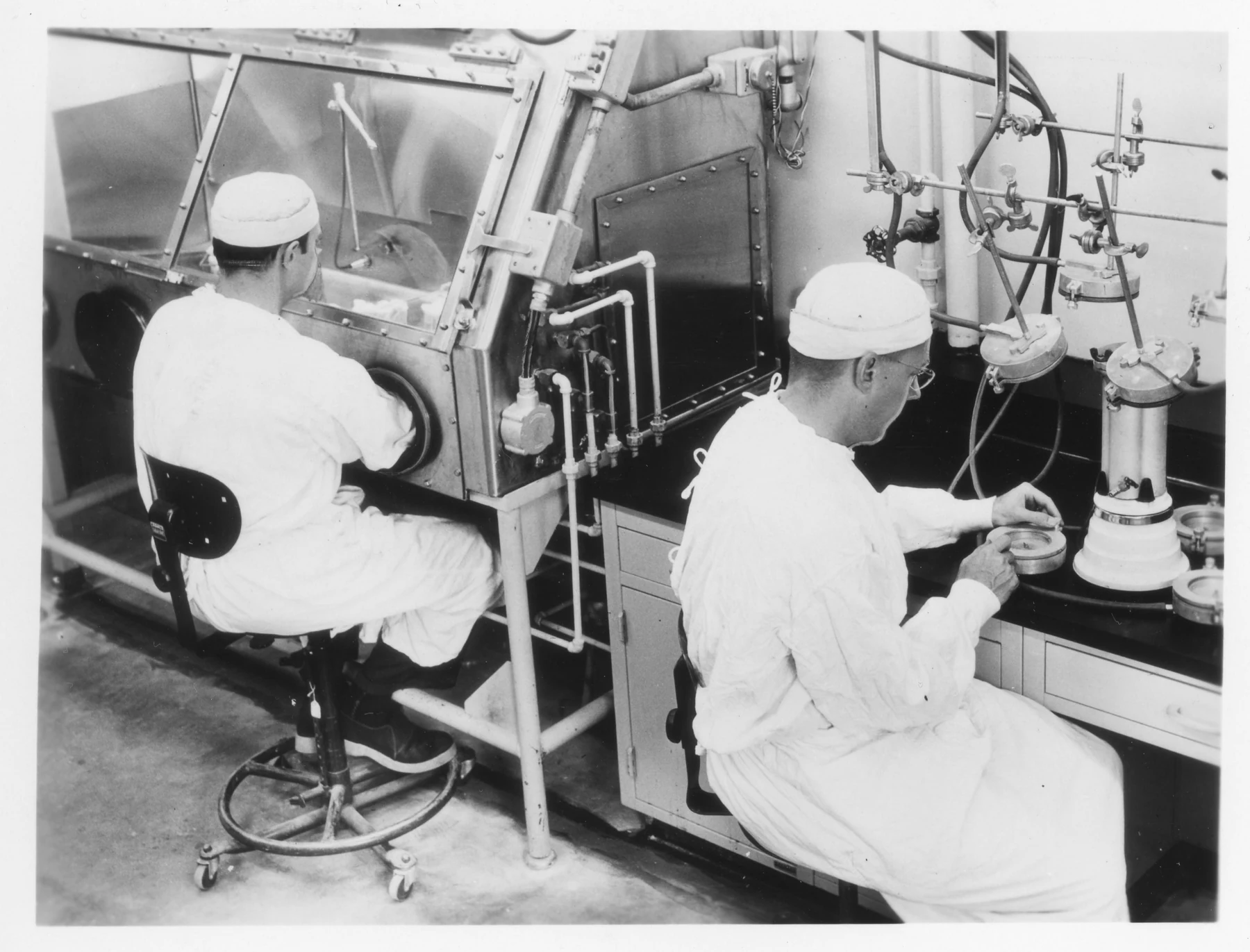
On 9 December 1953, CIA General Counsel Lawrence Houston recorded a “direct causal connection” between the experiment and Olson's death. His memorandum said this was the agency's official position. The admission stayed inside the government while Olson's family struggled to understand what had happened.
The file establishes a disturbing precedent: an agency could experiment on an unwitting man, acknowledge the consequences in its own records, and keep his family from that explanation for a generation. The secrecy is part of the documented history of his death.
03
A widow in the Oval Office
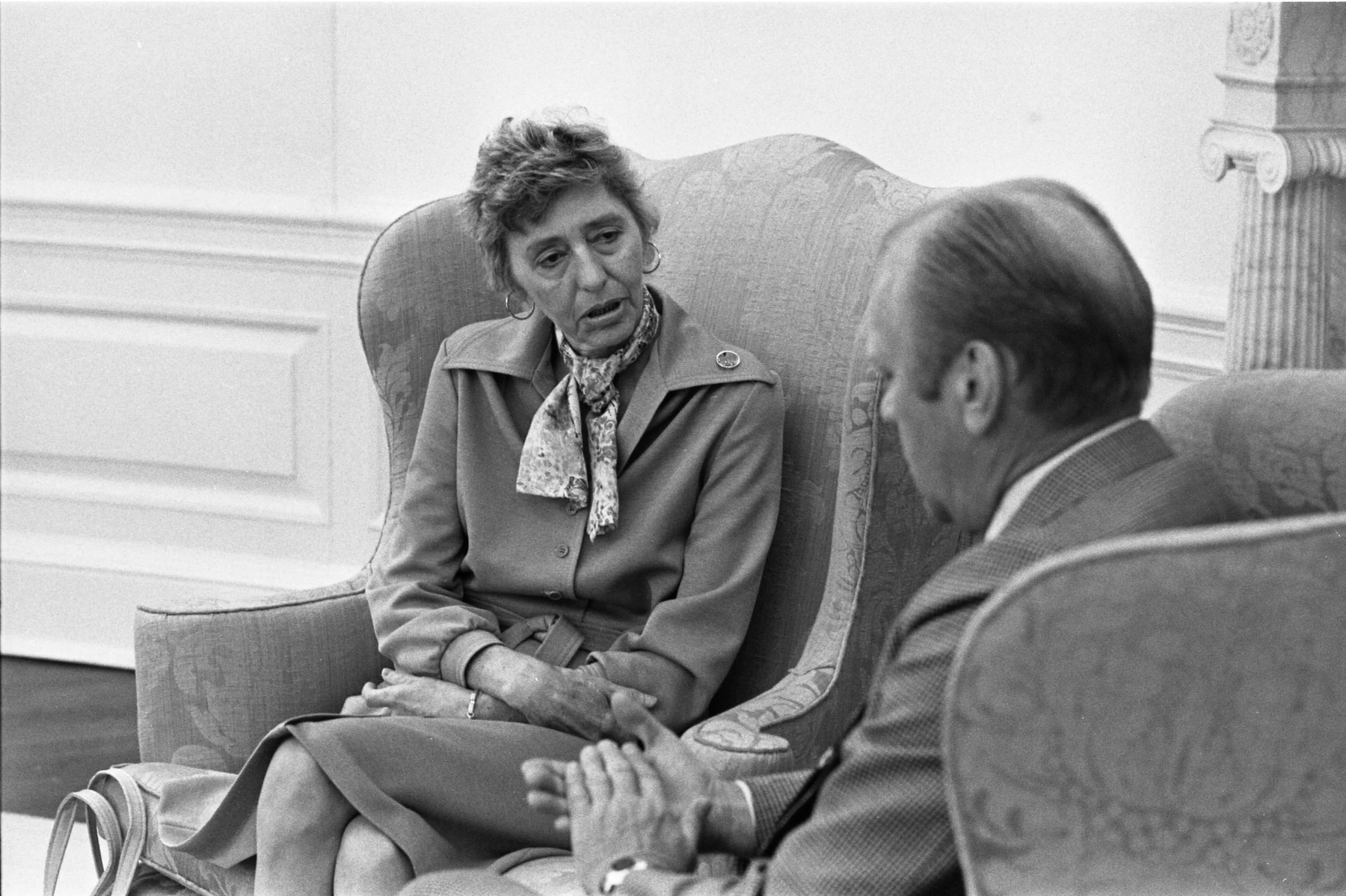
In 1975, the Rockefeller Commission's disclosures finally exposed the drug experiment. On 21 July, Alice Olson and her children met President Gerald Ford. He apologized on behalf of the United States government for the circumstances of Frank Olson's death. Alice asked for the facts; Ford directed his counsel's office to provide information to the family.
David Hume Kennerly's photograph records that encounter: a widow facing the President, twenty-two years after the government had begun recording what it knew.
04
The manual and the unanswered question
Olson's sons later alleged that the CIA had murdered him. An undated CIA assassination manual, preserved in its Guatemala operation's training files, discusses disguising killings as accidents, including falls. The parallel is chilling. The document establishes that such methods existed in agency training material; it does not establish that they were used on Olson.
Their lawsuit was dismissed in 2013 on legal grounds without resolving the murder allegation. This edition brings the released records, contemporary responses and later challenges together. Read the evidence behind the apology—and the questions the apology could not close.